As September draws to a close and October begins, the autumn season is now well underway. With temperatures becoming cooler and the green hues of trees starting to fade into more vibrant colors, it is time to talk about fall foliage! Let’s take a look at the past few months and how that plays into what we can potentially expect for this year’s fall foliage.
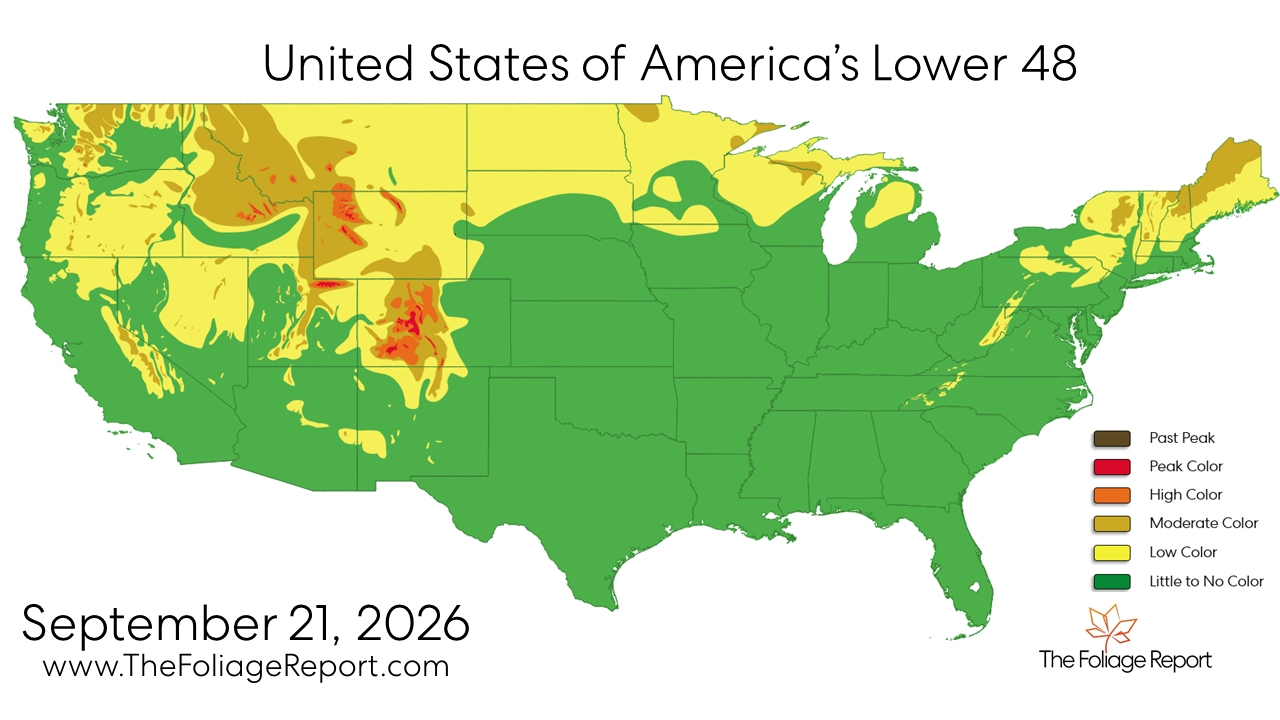
Lets begin with where we're at with the vibrant color. Thanks to our friends over at The Foliage Report, here is a look at color across the country. In case you missed it, we also sat down on an episode of The Weather Lounge to get an exlcusive look into the upcomig season.
Across the northeast, low color is being observed for much of Maine, New Hampshire, and Vermont, as well as the higher elevations of Pennsylvania and New York. Moderate color is even being seen in the highest elevations of New England. Down in the mid-Atlantic, there really aren't many spots seeing low color, other than the higher elevations of the Allegheny mountain range. Moving into the Midwest, mainly low color is being observed across portions of the Dakotas, Wisconsin, and Minnesota, with some speckles of moderate color. Out in the west, color is blossoming with many seeing low to moderate color. Even in the elevations of the Rockies, some high to peak colors are being observed,
How will this change in the coming weeks? Well, first we'll need take a look back at how things played out in the spring and summer months. There are many factors that play a role in determining how vibrant foliage ends up being. Some of these factors include shorter daylight hours and longer nights during the autumn season, but weather plays a significant role as well; both past and present. The “ideal” scenario for the most vibrant colors comes from a wetter growing season (between April to June), followed by a near-normal summer season. This means that both rainfall and temperature averages hover near climatological normal throughout the summer. These “optimal” conditions also allow leaves to linger on the trees for as long as possible, which is necessary for colors to “pop”. So, how did we do in 2026?
.png)
The growing season brought below average rainfall for a good portion of the Northeast and Mid-Atlantic. In fact, the only other locations that saw normal to above average rainfall were in northern New York, western Pennsylvania, and much of Vermont, New Hampshire, and Maine. In the Midwest, many areas from the Great Lakes over to Missouri saw average to above normal rainfall during the spring, whereas locations from NW Iowa into much of Minnesota ended up with below average precipitation. Temperatures for the Northeast, mid-Atlantic, and Midwest were mostly above average throughout the growing season, generally 1 - 3 degrees Fahrenheit above normal.
.png)
During the summer season, above average rainfall was seen across portions of the I-70 corridor in the Midwest, northern Illinois, and portions of northwestern Kentucky. Some instances of even 9 - 12” above normal precipitation were observed! Outside of that, most were below average with some pockets of 6 - 9” below normal precipitation seen in Wisconsin and Minnesota. There are similarities across the Northeast and mid-Atlantic, with pockets of above average to even significantly above average precipitation. One big hotspot for rain was in portions of the Hudson Valley, Long Island, and northern New Jersey. Outside of that, most were below to significantly below average rainfall during the summer, especially in Upstate New York, New Hampshire, Vermont, and Maine. In terms of how summertime temperatures stacked up, they were mainly above average.
.png)
That all being said, how do these variables add up with foliage this autumn? Parts of the Northeast and mid-Atlantic may be gearing up for a rather beautiful foliage season this year thanks to multiple rounds of drought busting rainfall, particularly for the Northeast. The one concern with heavy rain, especially from NE Pennsylvania, northern New Jersey, the Hudson Valley, and into Connecticut, would be a potential for fungus on trees. The combination of warmer temperatures and rain, however, may mitigate this factor. The cooler temperatures we have settled into this September will also aid in making colors pop and potentially sticking around a little longer. The only caveat comes from the amount of leaves that came down from our Nor’easter this past weekend. For the Midwest, the story is likely very similar to the Northeast with areas that saw above normal rainfall and above average temperatures potentially seeing a fairly vibrant season. Spots up in norther Wisconsin and Minnesota may see brief peak color, however, thanks to ongoing drought conditions.
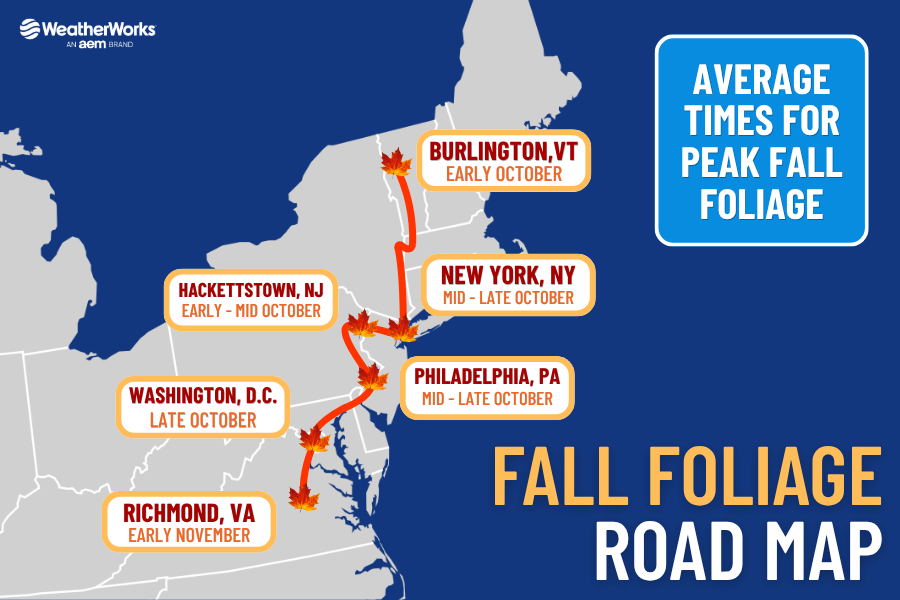
To summarize it all: We can likely expect vibrant and potentially even longer lasting colors for this year’s foliage season across portions of the Northeast, mid-Atlantic, and Midwest that saw above average and drought-busting rainfall this spring and summer in combination with above average temperatures. In locations that were drier, vibrant color may still be possible, but it may not last stick around as long before the leaves start falling from the trees. If you’re able to spend some time outdoors this season, we hope you are able to enjoy the beautiful hues no matter where you are! Happy Autumn!


