.png)
Throughout history, weather has played a decisive role in shaping the outcomes of major events. One such incident was the evacuation of Dunkirk during World War II. Known as Operation Dynamo, this mission would not have been such a resounding success without favorable weather conditions during the evacuation. So, what conditions made this evacuation possible? Before diving into the meteorological factors, let’s first set the stage with the historical context.
During the early months of the war, Britain and France mobilized their armies along the French-German border. Despite their deployments, little military action occurred until May 1940. This was a period dubbed the “Phony War” due to political and strategic hesitations. The allies focused on defensive strategies, relying heavily on the Maginot Line; a series of fortifications along the German border.
The calm ended when the Battle of France began on May 5th, 1940 when Germany invaded the Netherlands. The Dutch surrendered to the Germans on May 14th after being overwhelmed. Meanwhile, Germany launched a Blitzkrieg (German for "lightning war) through Belgium, bypassing the Maginot Line with overwhelming bombing. This was similar to the Schlieffen Plan from World War I. By mid-May 1940, German forces broke through Allied lines over in Ardennes and raced toward the English Channel, reaching it by May 20th. This maneuver trapped nearly 200,000 British Expeditionary Force (BEF) troops and 140,000 French and Allied soldiers near Dunkirk, France.
On May 24th, Adolf Hitler unexpectedly halted the German advance for two days, giving the Allies a critical window to organize an evacuation across the English Channel.
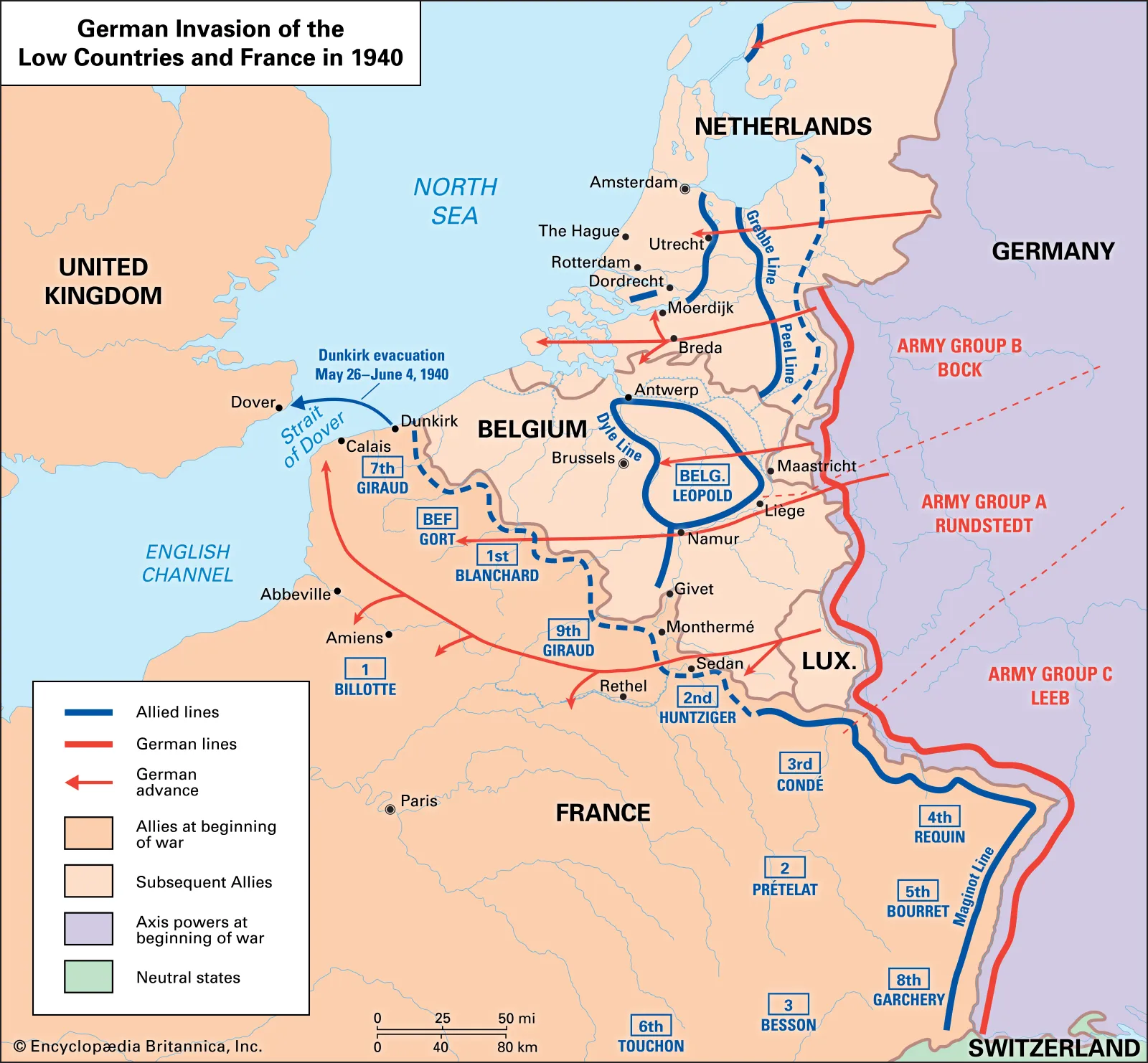
When the encirclement was complete and the allied troops became trapped against the sea, the British faced a daunting challenge: evacuating hundreds of thousands of troops across the English Channel under constant threat from German forces. Initial estimates suggested that only about 45,000 soldiers could be rescued. The British Royal Air Force (RAF) struggled to provide consistent air cover because Dunkirk was so close to the German front lines. The situation seemed bleak; however, favorable weather conditions came in the clutch.
The evacuation’s success hinged on two critical weather factors: calm seas and low clouds. These conditions were unusual for late May and early June, and they proved decisive.
First, the calm seas. The English Channel is often rough at this time of year, but during the evacuation, light winds kept the waters remarkably smooth. This allowed not only naval vessels to operate efficiently but also enabled an extraordinary civilian effort. Hundreds of small boats, known as the “little ships”, crossed the Channel to ferry soldiers from the beaches to larger ships offshore. Without calm seas, these small craft would have been unable to navigate safely, and the evacuation would have faltered.
Equally important were the low clouds. For several days, a thick overcast hung over Dunkirk, with ceilings as low as 300 feet. This severely limited the Luftwaffe’s ability to bomb Allied positions because German aircraft relied heavily on visual targeting. Adding to this advantage, smoke from a damaged refinery drifted across the beaches, further obscuring the troops from enemy planes. Together, these conditions created a natural shield that prevented devastating air attacks during the most critical phase of the evacuation.
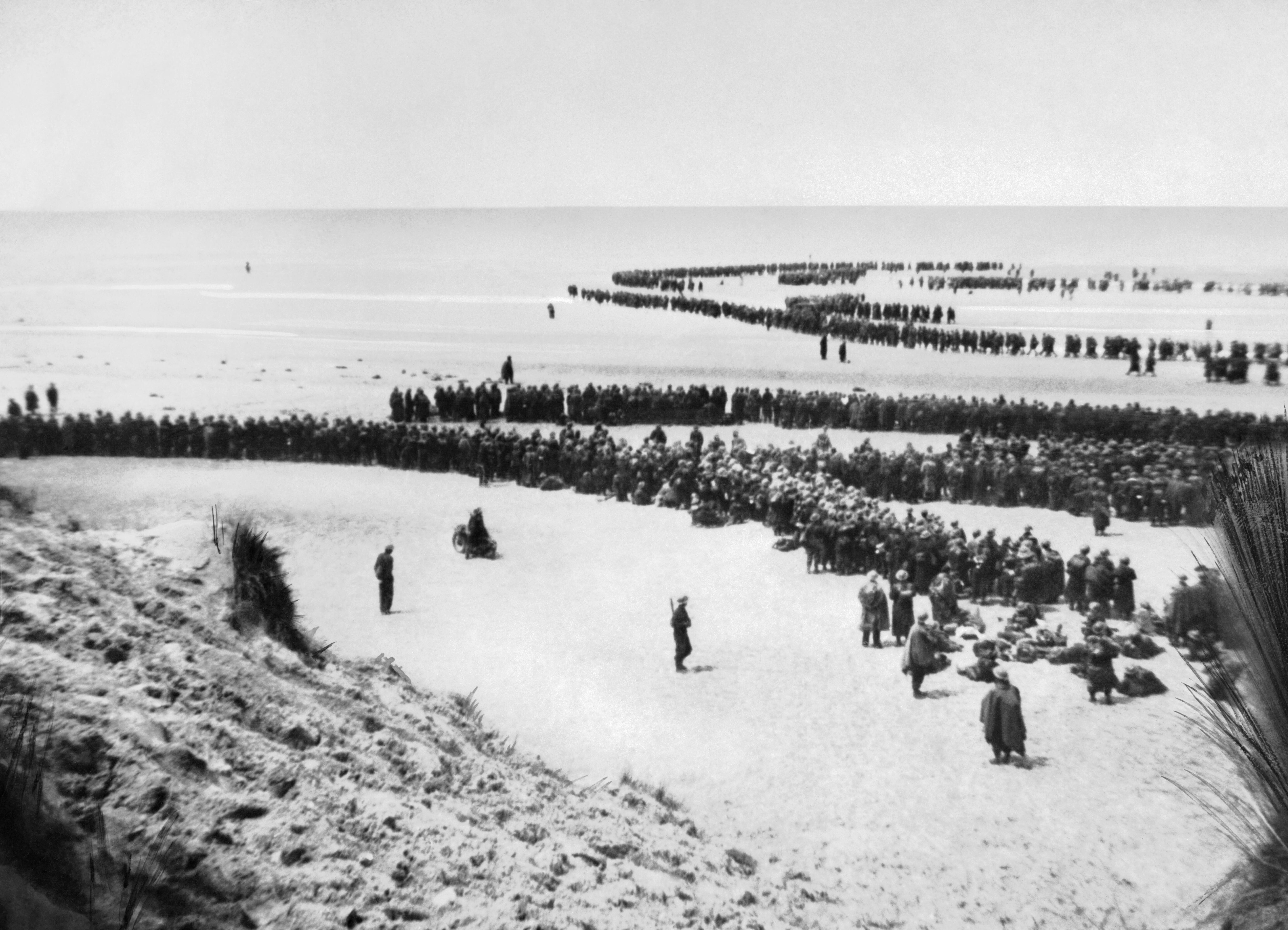
Allied troops on the beaches of Dunkirk waiting to be evacuated
The favorable conditions early in the evacuation were caused by a slow-moving low-pressure system originating in the northern Atlantic. This system brought overcast skies and rain but kept winds light, ensuring calm seas. The more favorable conditions to evacuate undetected were heavily in the first half which allowed for the British to fully organize. By June 1, the low moved out, and a ridge of high pressure built in, clearing skies and allowing the Luftwaffe to resume daytime attacks. But as the British were much better organized, they shifted to nighttime evacuations, taking advantage of Germany’s limited radar capability. Despite the increased risk, the operation continued successfully because the seas remained calm under high pressure.'
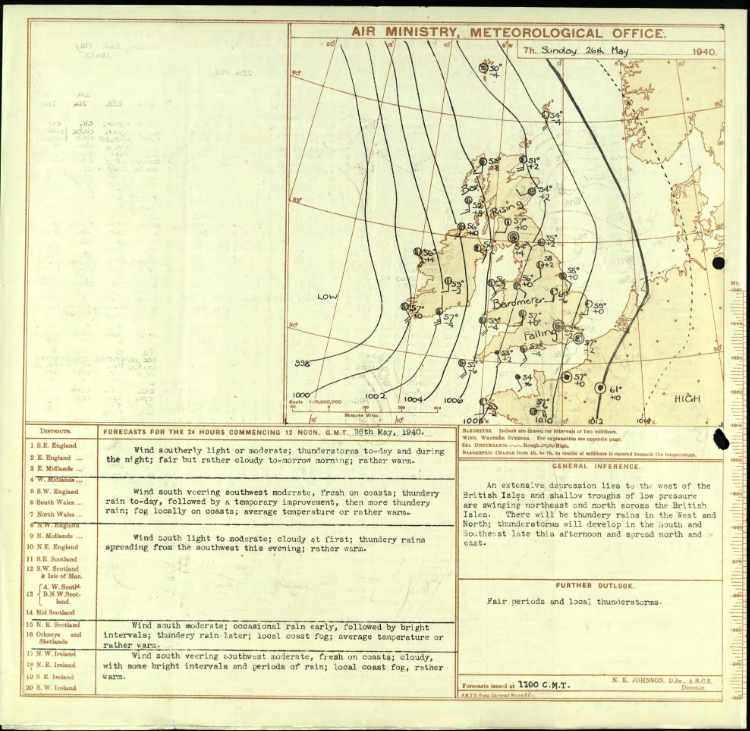
Meteorological Map from Sunday May 26th, 1940 - Courtesy of the British Air Ministry Meteorological Office
Had the weather not cooperated, the evacuation would likely have been a disaster. Instead of rescuing 338,000 troops, the British might have saved far fewer than the initial estimate of 45,000. Over 200,000 soldiers could have been captured, potentially forcing Britain to consider peace negotiations with the Nazis. While we can only speculate of what could have happened, it’s clear that favorable weather played a pivotal role in one of World War II’s most dramatic rescues.


