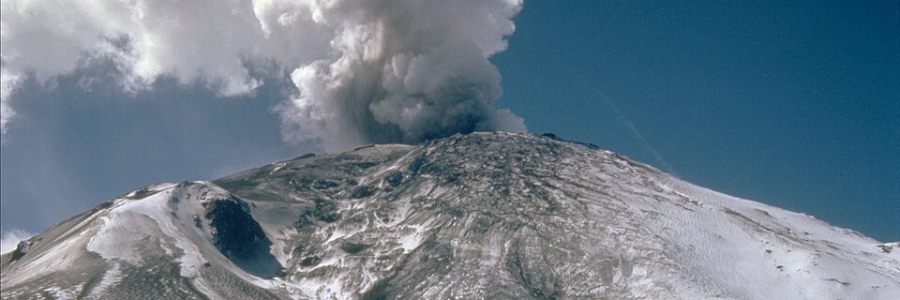
45 years ago on the morning of May 18, 1980, a century-dormant volcano erupted in a catastrophic fashion and with such vigor that it ended up with a volcanic explosivity index of 5. This is on par with an intensity similar to the infamous Mount Vesuvius eruption that blanketed Pompeii in A.D. 79!
While the geological scope of the Mount Saint Helen's eruption can be hard to grasp, one aspect that often gets overlooked are the effects it had on the atmosphere, both in the short term and on a longer time scale. As a result of atmospheric processes, there were indirect impacts from the eruption that would be seen hundreds of miles away from the epicenter in Washington state. We'll dive into those effects in this article.
The cataclysmic events of May 18, 1980 were a climatic end to a process that had begun just two months prior when small earthquakes began to transpire. This was indicative of new magma flows occurring below the volcano's surface. Prior to that spring, St. Helens had been a dormant volcano since the last active period, which was not since the 1850s! In the weeks that followed, subsequent shocks occurred at a slightly increasing rate. There were no direct signs that a large eruption was imminent, though small avalanches of snow and ice were observed falling off the dormant volcano, resulting from the increase in seismic activity.
During the month of April, the north side of the mountain was observed to be "swelling", with portions of it displaced outward on the order of 250 feet or more. This bulge continued to expand throughout the month, increasing by 5 to 6 feet per day. By mid-May, just before the eruption itself, St. Helen's north face extended more than 400 feet from its original measurement. Anxiety over the looming potential of an eruption mounted, with the main fear that a collapse of the bulge would trigger an enormous eruption.
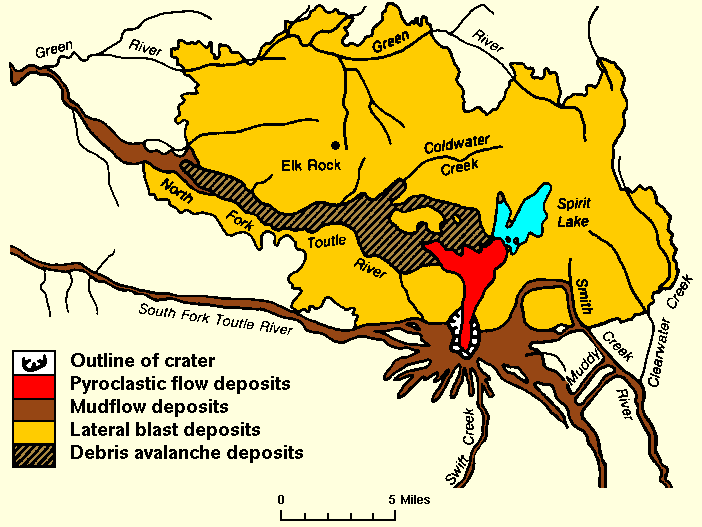
These fears would be realized, and after weeks of unsettling signs, it all came to an end on May 18th. At 8:32am, a magnitude 5.1 earthquake was measured just under the north face of the mountain, which triggered a volcanic slide just mere seconds later. Almost immediately after the initial earthquake, the main volcanic blast then occurred, causing a landslide that traveled over 100 mph northward.
While the most immediate impacts of the eruption were the avalanches and subsequent pyroclastic flows (these swept hot volcanic material and gasses out from the epicenter), the large column of ash that was thrown into the atmosphere above St. Helens would result in impacts emanating miles beyond the vicinity.
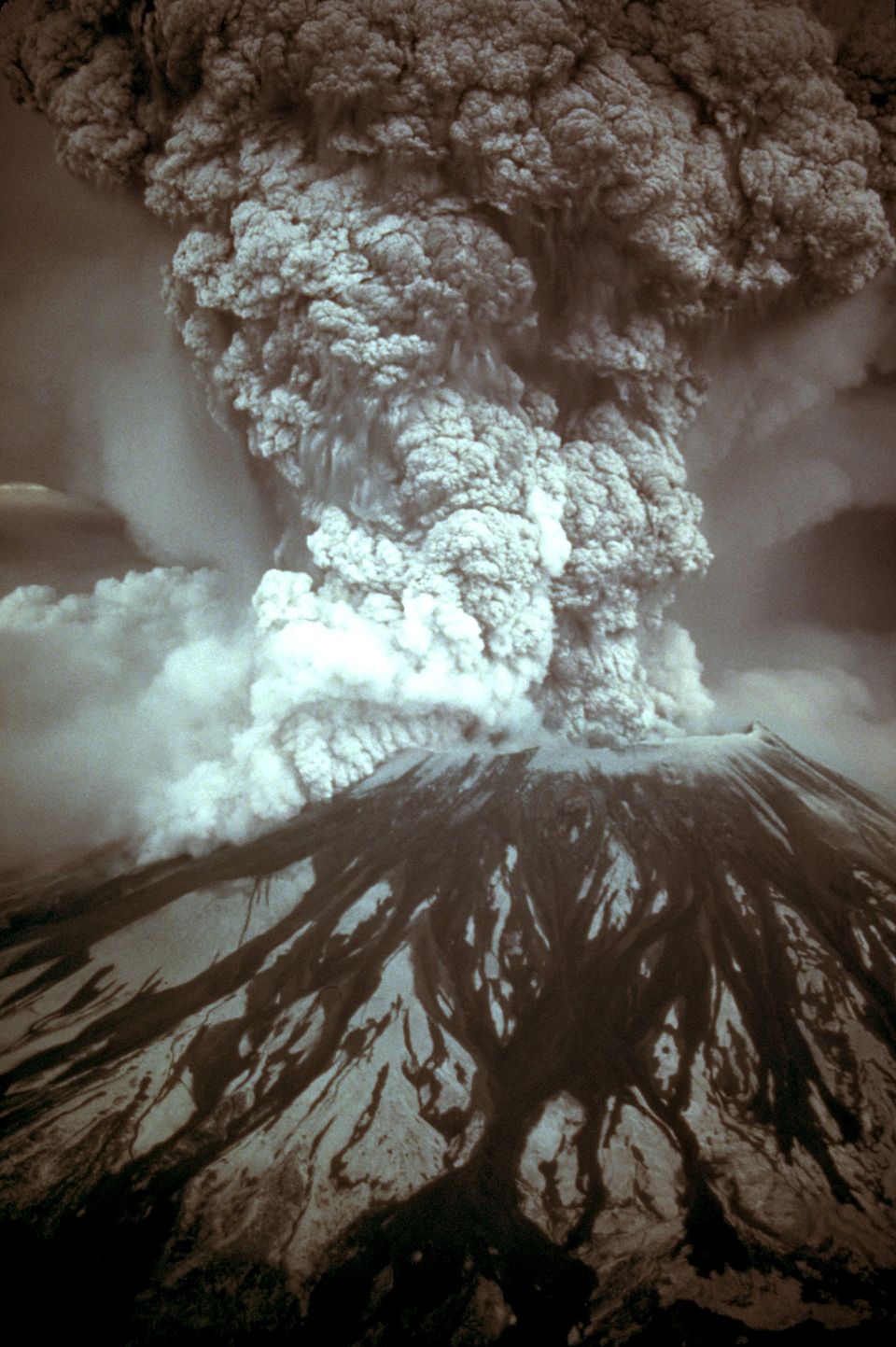
Within ten minutes of the initial avalanche a large column of ash soared 12 miles into the air, spreading tephra (fragmented material produced after volcanic eruptions) well into the stratosphere. Plumes of this volcanic matter continued to be sent aloft for ten hours straight after the eruption began.
The swirling of ash particles in the air created a buildup of static electricity, which which sparked lightning within the vicinity of St. Helens. Such a self-induced meteorological phenomenon would lead to the ignition of forest fires in addition to ones already induced from pyroclastic flows.
It is estimated that 540 million tons of ash fell back to earth after the nine hours of continuous eruptive activity. Steam explosions from the meeting of pyroclastic flows and nearby lakes / ice cover sent additional earthly materials as much as 6,500 feet aloft into the air.
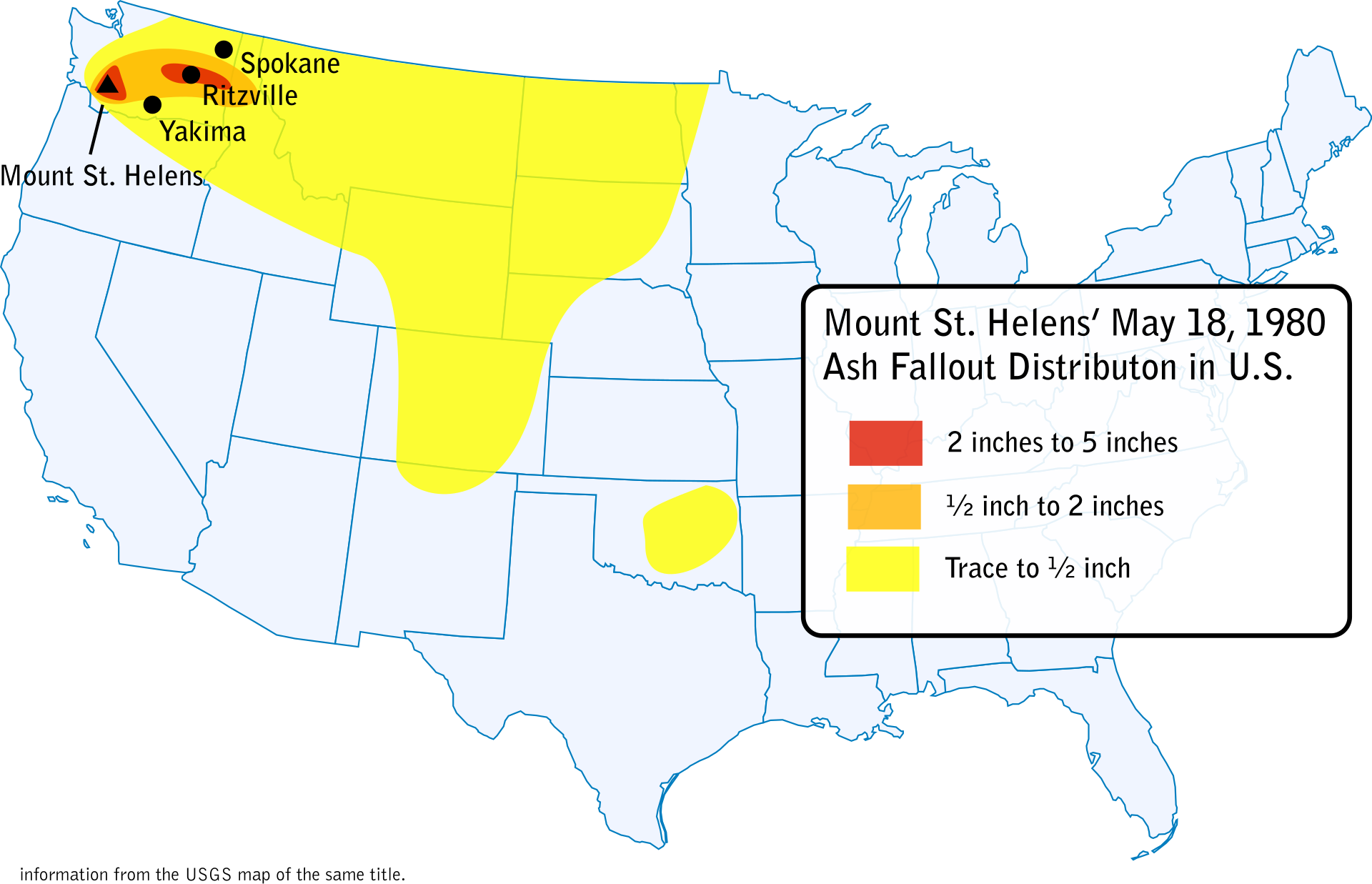
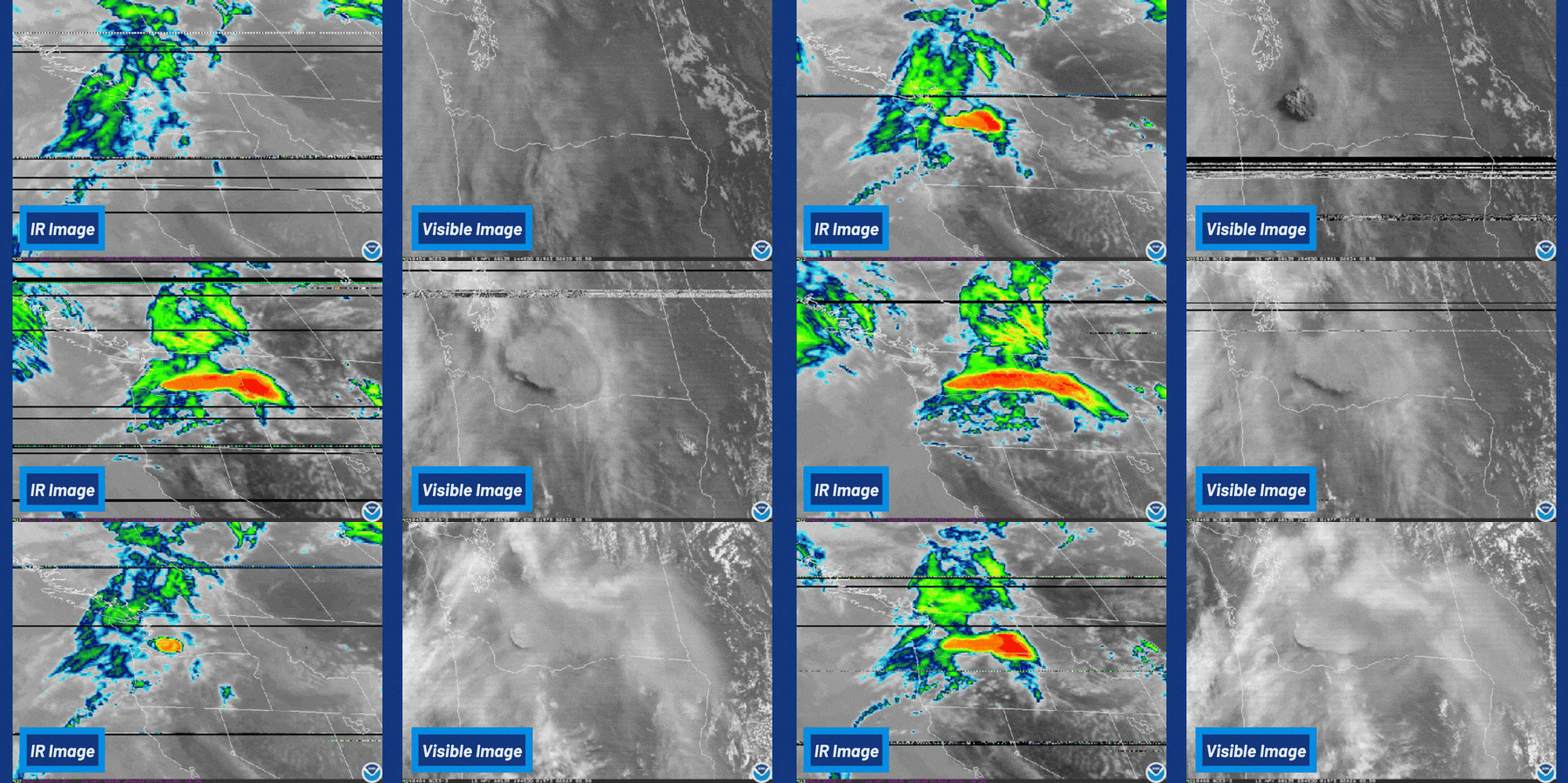
By ejecting volcanic material high up into the atmosphere, high-altitude winds were able to carry the higher plumes of ash well beyond the immediate vicinity of Mount St. Helens. Within about an hour of the explosion, east-north easterly winds carried material to the city of Yakima, Washington 90 miles away. Debris reached the skies over Spokane about three hours after the eruption began. GOES-3 satellite captured the moment of the eruption below. You can see the bright reds on Infrared on the left (indicating high cloud tops) and the subsequent blast of the ash cloud on the right.
Areas within the state of Washington had the most severe impacts from this ash fallout, with the eastern half of the state largely plunged into darkness by the middle of the day. Yakima, WA reported as much as 4 to 5 inches of ash accumulation, with Spokane measuring up to half an inch.
By the evening of May 18, ash from St. Helens was falling over the western expanses of Yellowstone National Park. Places as far as Denver, Colorado reported ash falling during the day on the 19th, with Minnesota and Oklahoma also noting some measurable ash shortly thereafter. While ashfall wasn't reported beyond the scope of the United States, these airborne particles circled the globe within two weeks' time.
Beyond the direct impacts near the volcano itself and a death toll of roughly 57, The St. Helens eruption would cause considerable problems across large swaths of Washington state and nearby states.
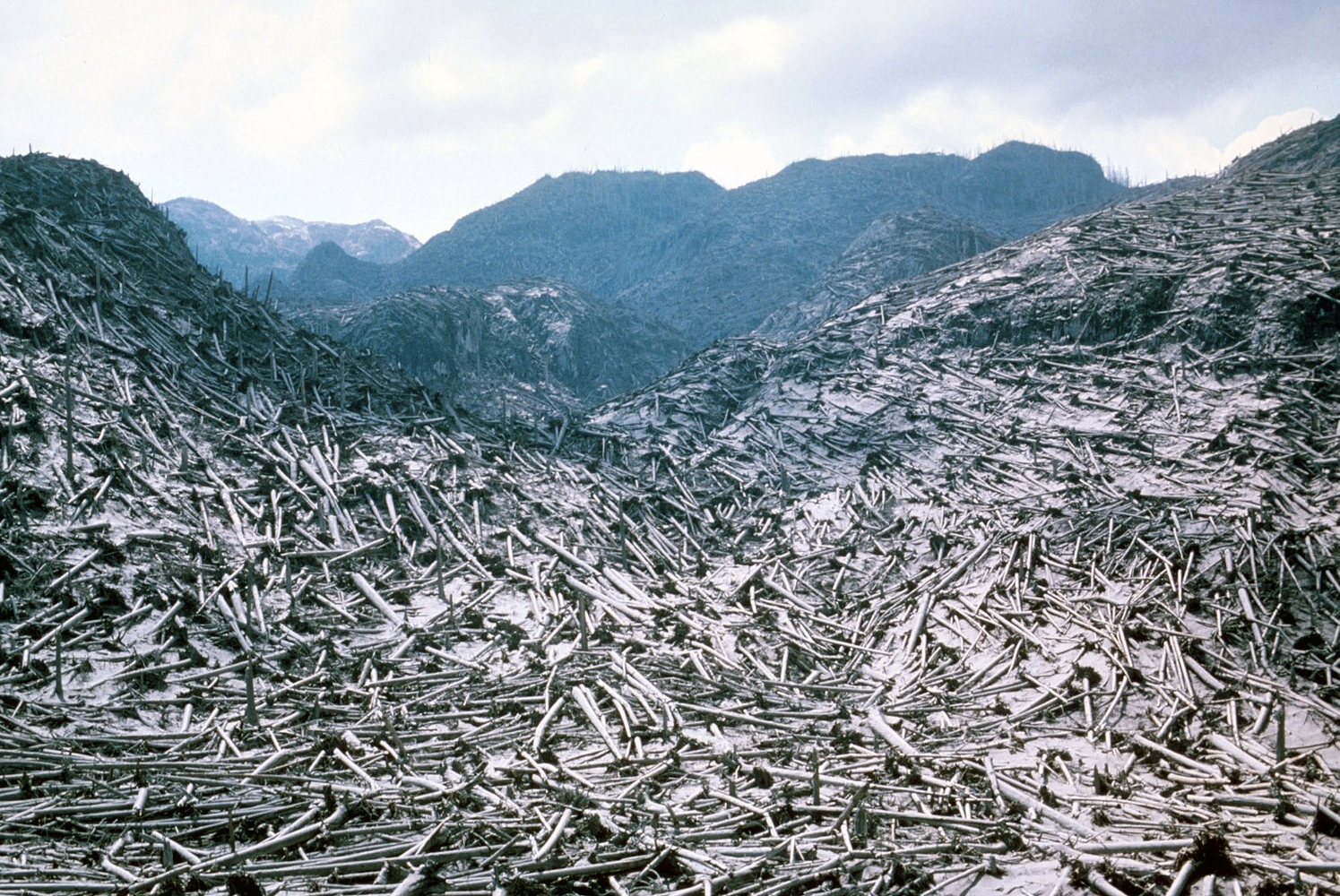
In the immediate aftermath, ashfall resulted in transportation hurdles, especially along the I-90 corridor that ran east-west through Washington. For a week and a half following the eruption, the interstate highway between Seattle and Spokane was shut down. Poor visibility from ash clouds shut down surrounding air traffic for several days, with some local airports being closed for up to two weeks in order to clear ash accumulations on runways.
The other issue with ash is just how small it is. These fine particles were able to find their way into internal combustible engines, causing malfunctions and electrical problems for various machinery, including the clean-up crews. Electrical transformers in the region short-circuited, causing several blackouts.

Removal of the ash became a nightmare. It was similar in practice to how snow removal is done, but on a much larger scale. The city of Yakima spent $2.2 million to remove the ash from its jurisdiction, taking ten weeks to fully clear it out. An estimated 900,000 tons of ash was removed from highways and airports across the region, equivalent to 2.4 million cubic yards of material.
Unlike snow accumulation, which would melt off eventually, ash could stick around and remain a problem even after removal thanks to winds sifting material and resulting in further cleanup. Because of how loose and fine ash is, top soil was deposited on top of ash dumping grounds in some areas in order to secure it and prevent further dispersal.
The eruption of St. Helens remains one of the most impactful geological disasters to impact the nation. While fatalities from the disaster were limited to a closer radius to the epicenter, the impacts expanded well beyond Washington as a result of atmospheric forces. Observers hundreds of miles away caught glimpses of the eruption in the form of ashfall. Such phenomena are not as common as other disasters such as tornadoes, hurricanes, or blizzards, but the effects of a volcanic eruption, much like that of St. Helens, show how interconnected geological and atmospheric processes truly are.


