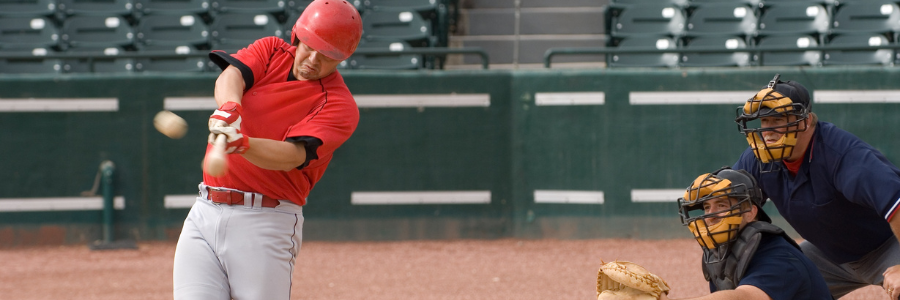
With Opening Day of Major League Baseball here in the United States taking place today, let’s talk about one of the most exciting occurrences in the sport: the home run. Who doesn’t like to see their team hit one? Seeing that baseball fly through the air and into the stands, allowing for an instant score and bringing a huge excitement (or heartbreak) whether you're on your couch, at a bar, or in the ballpark. But can weather affect a player's chances of hitting a home run? And if so, when would be that best chance of seeing more home runs hit?
So to start off, yes: weather has a direct impact on the travel of a baseball, just like how a golf ball's distance is affected. Before getting into the details, it’s important to understand how air density affects a batted ball. The denser the air around the ball, the more resistance the baseball encounters and the shorter the ball will travel. What does denser air mean though?
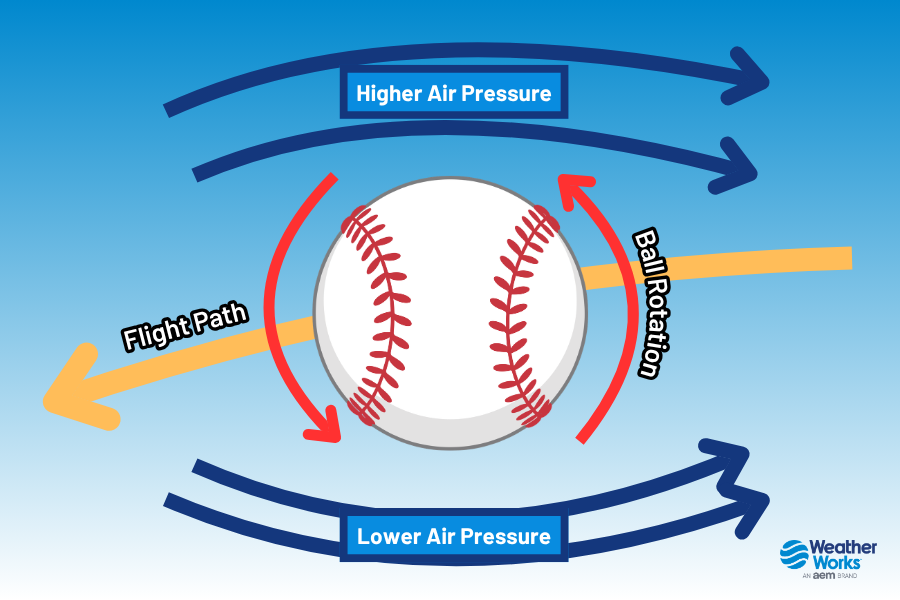
Well, it describes when air molecules are tightly packed together. This means a hard‑hit baseball has to push through more of these tightly packed air molecules. On the flip side, less dense air describes molecules that are spaced farther apart. This allows for less drag on the baseball and allows it to travel farther. You can see a diagram of higher and lower pressure on a baseball above. Now, let's figure out what affects air density.
Their are two main meteorological factors that have an impact on air density: temperature and humidity.
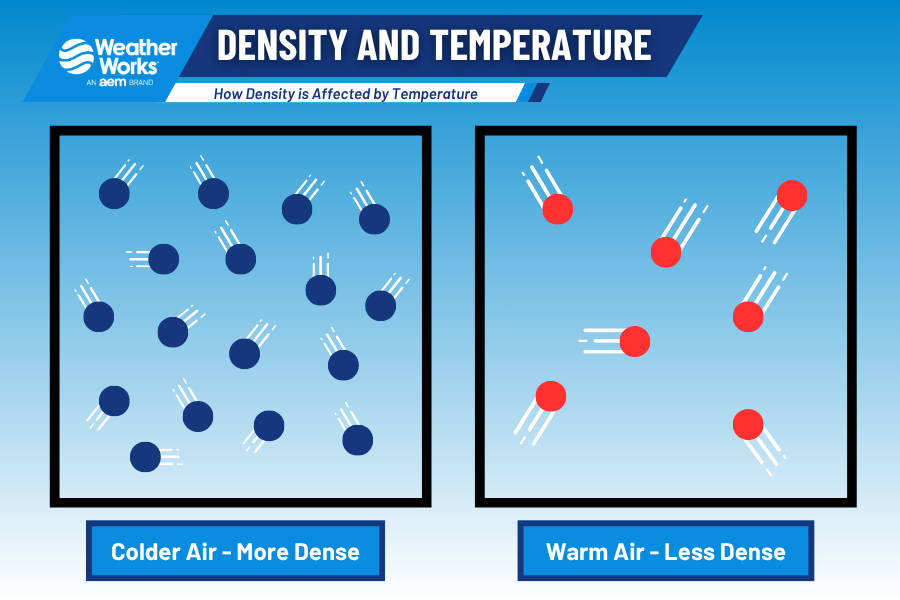
Temperature: Probably the most significant factor to the distance of a baseball. Depending on how warm or cold the surrounding air is, will affect how dense it is. Warmer air is less dense and colder air is more dense. The reason for this is because warmer air "energizes" or excites the molecules, causing them to be more likely to bounce around and more importantly: be spread apart. That high spacing between molecules reduces drag and helps the baseball travel farther. In contrast, colder air slows down molecular movement, keeping them more tightly packed together and adds more air resistance on the ball.
Humidity: While not as strongly of a role as temperature has, it does make a difference on air density. Even though a humid airmass can feel quite heavy, especially to us humans when we spend time outdoors, it is actually a less dense airmass. Why is that? Well the atmosphere consists of mostly oxygen and nitrogen gasses, and water vapor is actually a lighter composition. So when you have higher humidity, there is more water vapot in the air and thus, the density is actually less dense than a drier airmass. So a hot and humid day is prime for lower air density, with colder and drier the opposite!
Of course, there are many other factors that influence the number of home runs (batter skill, bat compisition, stadium design, etc), but from a meteorological aspect, temperature and humidity are the two major drivers to the success of a home run.
An example of this can be seen here. Imagine a batter hits a 105 mph fast ball with a launch angle of 28 degrees, which typically travels around 400 feet. The research shows that when you increase the temperature by just 1°F, it adds roughly 0.33 feet to the ball’s travel distance. Humidity is more challenging to quantify in exact numbers, but its effects (generally increasing ball distance) is well documented.
When examining the data from 2022 on baseballs hit with launch angles of 27–28 degrees, the trend becomes obvious: Higher temperatures correlate with longer travel of a baseball. Exit velocities (how fast the ball is thrown) still remains the strongest predictor of a home run being able to occur, but of course temperature helps to boost the odds of one occuring.
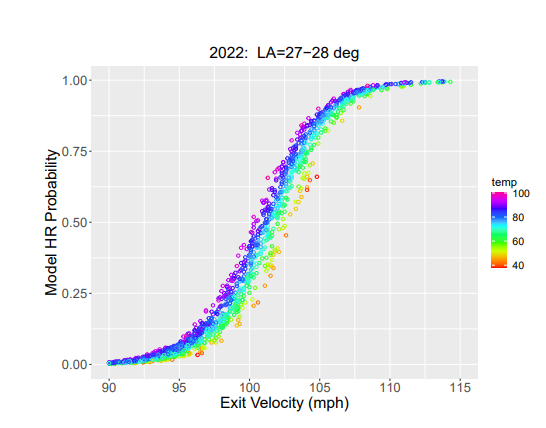 2022 Statcast data where HR probability plotted vs. exit velocity. (Courtesy of the Department of Physics, University of Illinois)
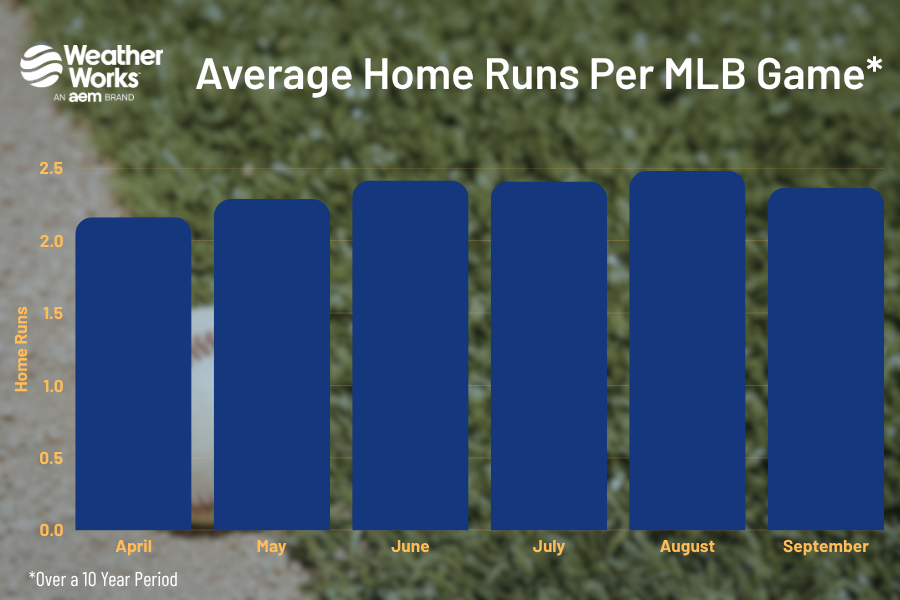
To look into the data even more, a full analysis was conducted by the Department of Physics at the University of Ilinois using home‑run totals from the 2015–2025 MLB seasons (excluding 2020 due to the shortened COVID season). Ten years of data provides us with a more reliable picture of how home runs per game vary throughout the season.
The results strongly support the science: home runs usually peak during the summer months of June, July, and August when temperatures are highest and where you are more likely to have higher humidity in place. Meanwhile, home runs take a slight hit during the off peak months of April, May, and September. If you're planning a trip to see a baseball game this season and want to maximize your chances of seeing home runs, your best bet is during the hot summer months, or just a particularly warm day. Even routine fly balls have a better shot of leaving the yard!
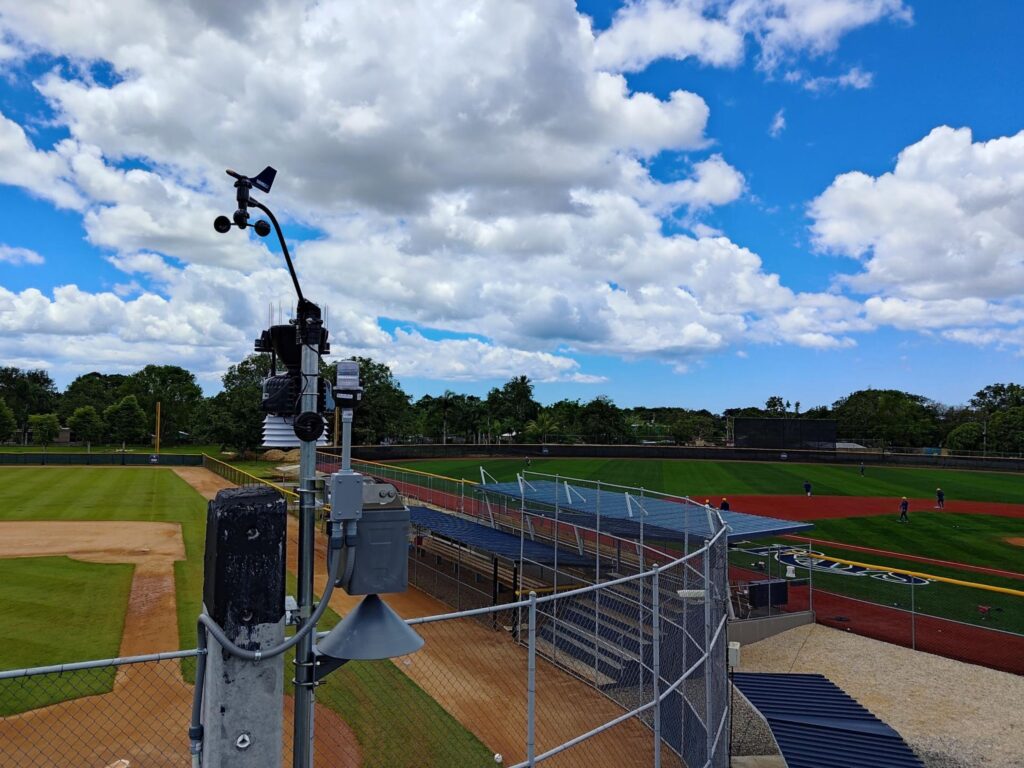
Did you know? AEM provides year round weather solutions for all Sports teams and Clubs. And for baseball operations we understand how important it is to having up to date weather conditions. Whether it's figuring out if field conditions will be ideal for the game or understanding the risk factor for fans and players at a ballpark if severe weather and lightning is in the forecast; being weather aware for gameday is crutial to keeping your players, staff and fans safe and happy.
Visit https://aem.eco/industry/club-sport/ to learn more about how our weather products and services can help you year round!