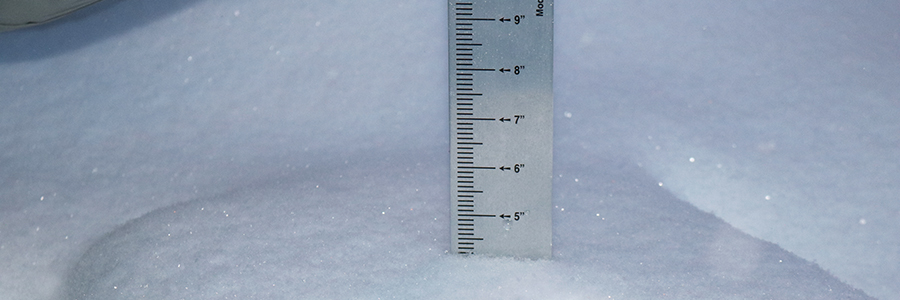
Have you ever walked outside after a snowstorm with a ruler in hand and stuck it into your front lawn to see just how much has fallen? Most people have done this, and while it seems like one of the most simple things to measure, most people are actually doing it incorrectly. Yes, you read that right. Snowfall measuring is a science and it requires an understanding of where to measure, when to measure, and more importantly how to measure. So let's break down what goes into a proper snow measurement.
Isn't snowfall and snow depth the same thing? Well, not quite! The official definition of snowfall is new snow that has fallen, reported to the nearest tenth of an inch. You take this measurement as soon as snow has stopped falling, and usually is done no more than 4 times in a day. Snow depth, on the other hand is the total snowfall reported on the ground. This includes snowfall AND any older snowfall that has remained from prior snow events. This snow measurement is rounded to the nearest inch and reported early in the morning.
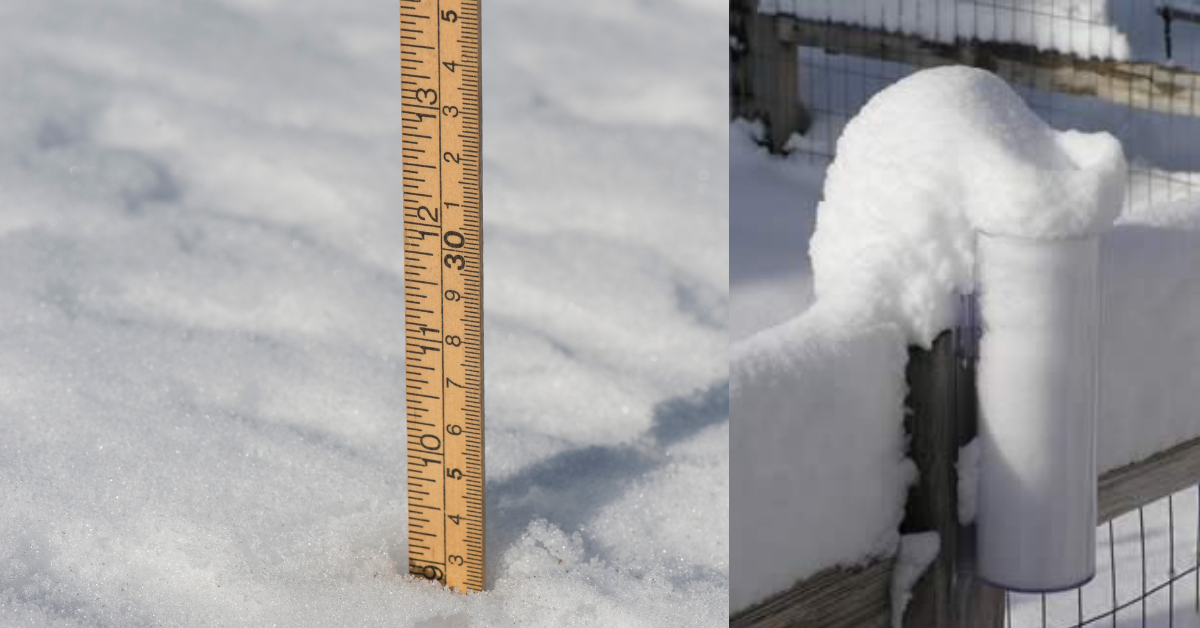
Networks like CoCoRaHS have set the standard for these measurements to be taken between 7-8 am. The other thing that observers like CoCoRaHS and trained spotters must know about is the Liquid Equivalency of snow. Essentially this is where the observer takes the snowfall total collected, usually in a rain gauge, and melts it down into a liquid. That liquid is then measured to the nearest hundredth of an inch. This helps us calculate what is known as a "snow ratio". Average snowfall is on a 10:1 ratio, meaning 10" of snowfall for every 1" of liquid equivalency. Sometimes heavier and denser snowfall can be as low as 7 or 8:1 inch, but fluffier and powdery snow as high as 30:1! Sleet, on the other hand, is quite low, around 2:1. This is why a half inch of sleet can feel really heavy when shoveling it.
Here are some of the most common mistakes people make when measuring snowfall
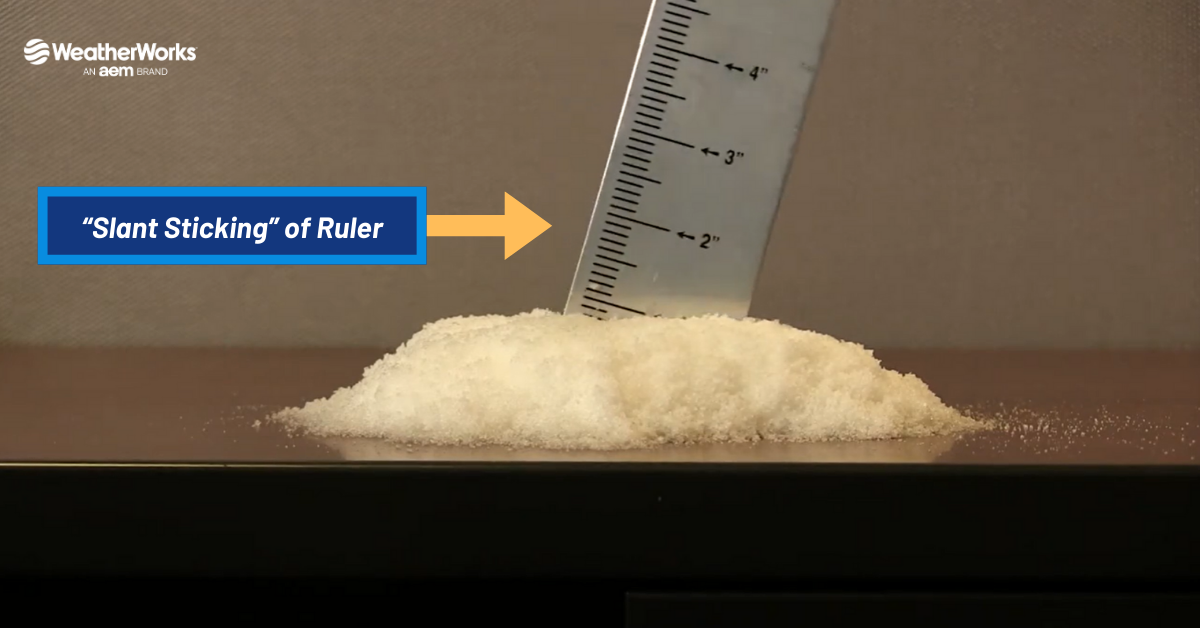
When measuring snow, it's easy to get carried away from all the excitement of finding out how much snow fell. Make sure to avoid something called "slant sticking", which is when you have the ruler in the snow at an angle, giving the appearance of a higher total than normal. Pushing up against the snow can also lead to a misleading total. Along with slant sticking, if you push a ruler in grass, depending on if the ground is frozen solid or not, it can push into the dirt and make the measurement deeper than what it really is.
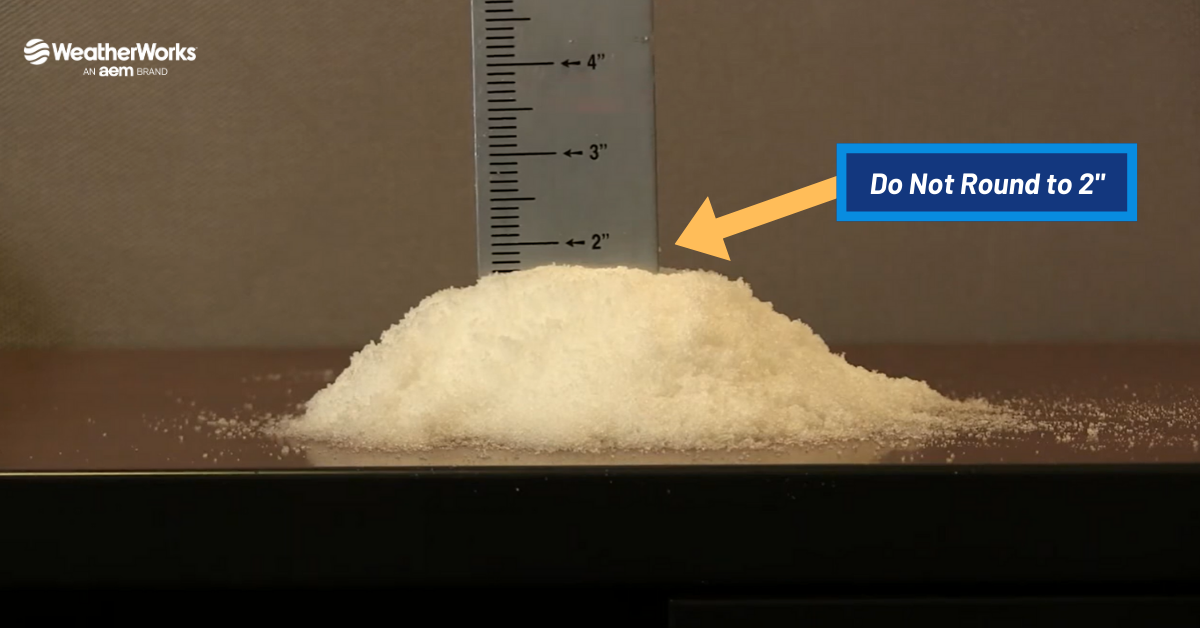
It's easy to eyeball the snow and go "Yeah we got about X inches/centimeters of snow". However, a proper measurement of snow actually is reported to the nearest tenth. This also means that if your snowfall measurement gets to 5.7", that does NOT mean you got 6".
If snow drifts are present or it's windy, it can be very tough to get a very precise snowfall measurement. So if you are unable to find an undisturbed area of snowfall, then the proper thing to do is take multiple measurements and calculate an average. Avoid areas where snow could collect from the wind, like near the side of a building as well. And in the same regards to drifts, it comes as no surprise that you should never take a snow measurement in a snow pile from a shoveled walk or driveway.
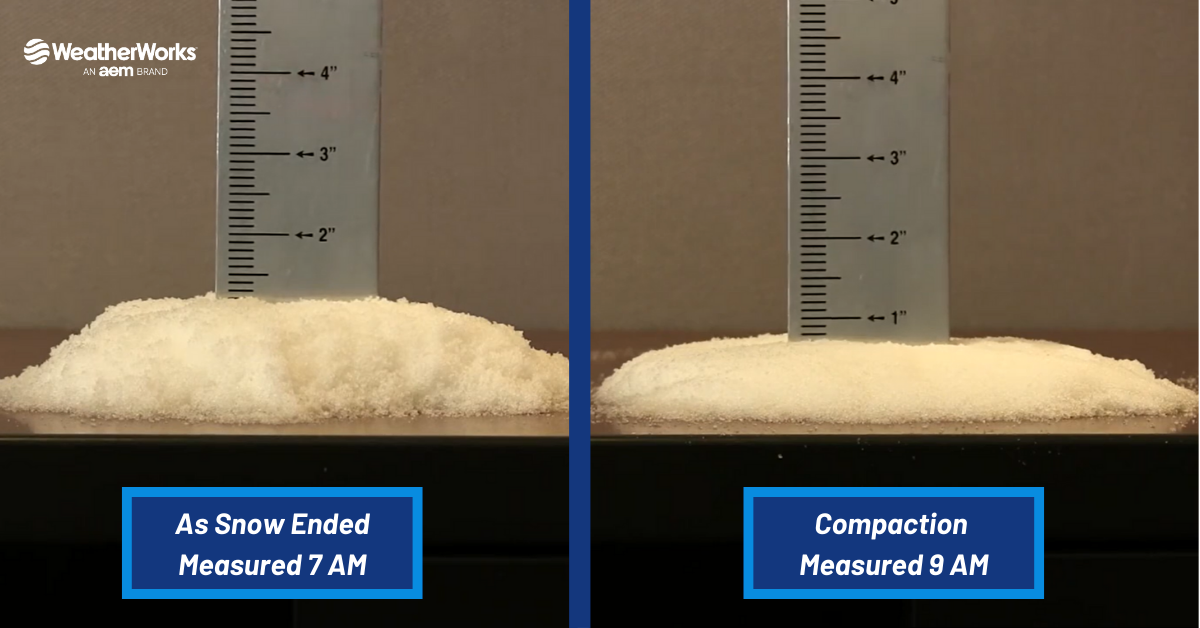
Timing is everything, and that includes when it comes to snow measurements. The time you decide to measure can mean the difference of anywhere from a few tenths to a few inches! Compaction of snow is the main consequence to measuring snow too late. If you don't take a snow measurement as soon as the last flakes have fallen, you're at risk of losing some of the measurement from sun/warming temperatures melting away at your snow pack. Compaction can also be caused from mixed precipitation, especially sleet, which helps to push down snow totals and makes it much more dense and heavier.
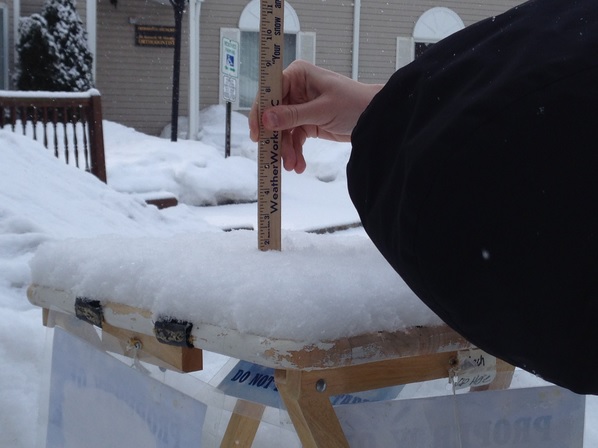
So, what is the official, proper way to measure snow? Well as we mentioned earlier, make sure your measurement spot is a location that is not prone to drifting or under a tree/overhang. While you can just stick a ruler in the grass (remember, over estimation issues), it's belter to have a dedicated solid surface for measurements. Official spotters and observers like CoCoRaHS use a surface called a "snow board"...no, we're not talking about that kind of snowboard! This is typically any flat, light colored surface that is 2x2 feet in size and placed on top of the ground or elevated. You can see an example of what an elevated snowboard setup looks like above. Even a wooden, white painted surface can work!
Once you have your light colored surface/snowboard, you're ready to measure! It's a good idea to mark where your snowboard is, just in case you lose it in the snow! Grab your ruler and stick it straight down into the snow, making sure you don't "slant-stick" it. Per the National Weather Service, they recommend cleaning the snowboard immediately following the snow event.
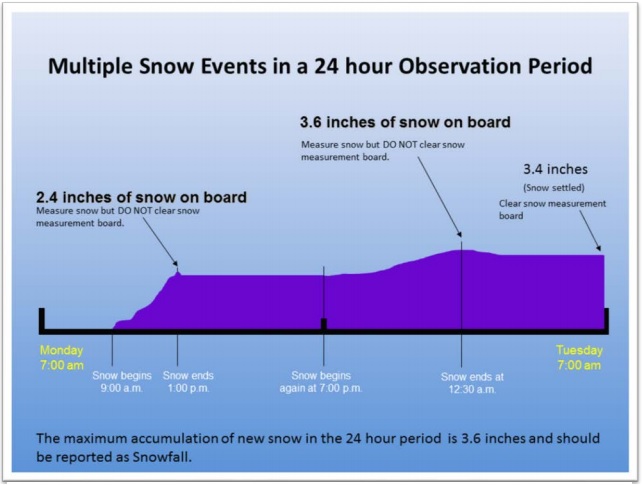
However, if it is on and off snow within 24 hours, you should keep the snow on the snowboard undisturbed until 24 hours have passed. An example of how this would look is what is described in the graphic below.
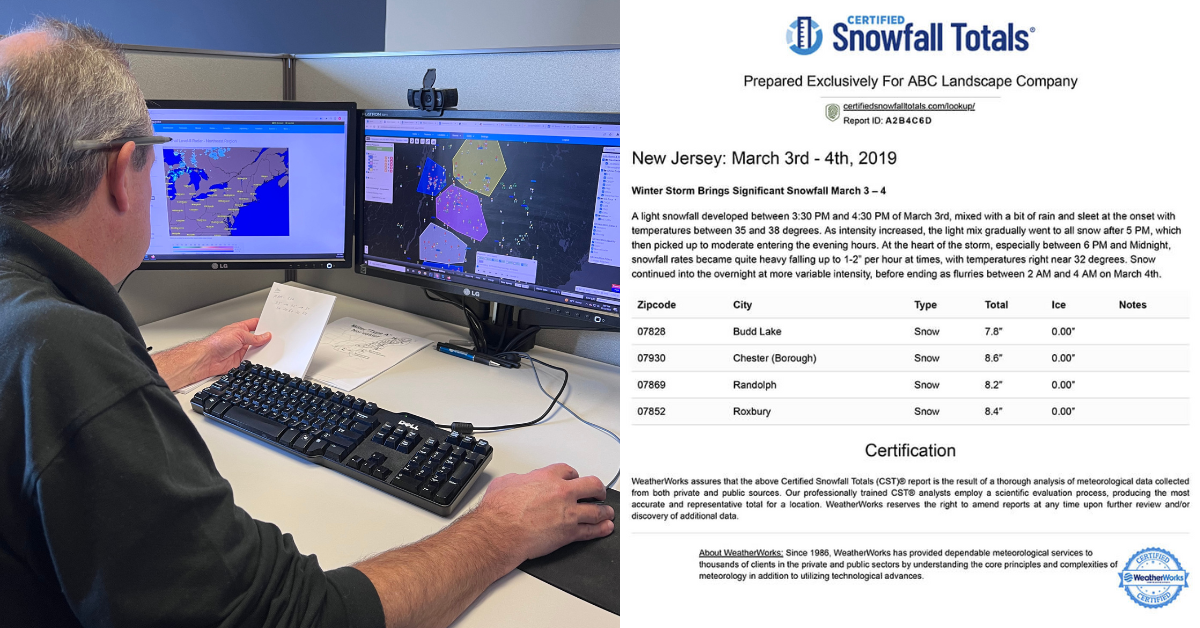
Accurate snowfall data is more than just a number on a page, it's a complete documentation that protects budgets, contract structures, and supports credibility long after a snowstorm ends. Snow totals influence everything from a plowing invoice and trigger thresholds to even supplementing slip-and-fall claims, insurance disputes, and more! Relying on unofficial or inconsistent measurements can leave room for doubt, disagreement and pushback.
With Certified Snowfall Totals®, that changes the game. Each report is produced by meteorologists using a rigorous quality controll procss that combs radar data, private and public observing networks, as well as social media and online forums to produce a representative total at the zip or postal code level. The result is an unbiased, defensible snowfall record you can confidently stand behind. To learn more or sign-up for a free demo, visit certifiedsnowfalltotals.com