.png)
Weather is one of the most overlooked factors that influence the course of human history. Whether it be the bitter Russian winters that halted Napoleon's "dominance" over Europe or the use of weather forecasting to outsmart the Germans in planning the D-Day invasion, it's interesting to look back and see how external influences like the weather can directly affect the course of history.
One such instance that played a pivotal role in history was during the American Revolution, specifically with the Battle of Long Island in August 1776. At this point, the war had entered its second year and the victory of the rebelling colonists was still far from being realized. If anything, it appeared that the British were in control, with one strategic maneuver on Long Island potentially ending the war outright with a capture of the Continental Army.
The Battle of Long Island (also known as the Battle of Brooklyn) was fought in August of 1776 as way to defende New York City from British control. After the British landed on Staten Island earlier that summer, George Washington concentrated his troops on the island of Manhattan and waited for the attack. Over the course of a month and a half, the British increased their presence at the mouth of New York Harbor to 32,000 troops.
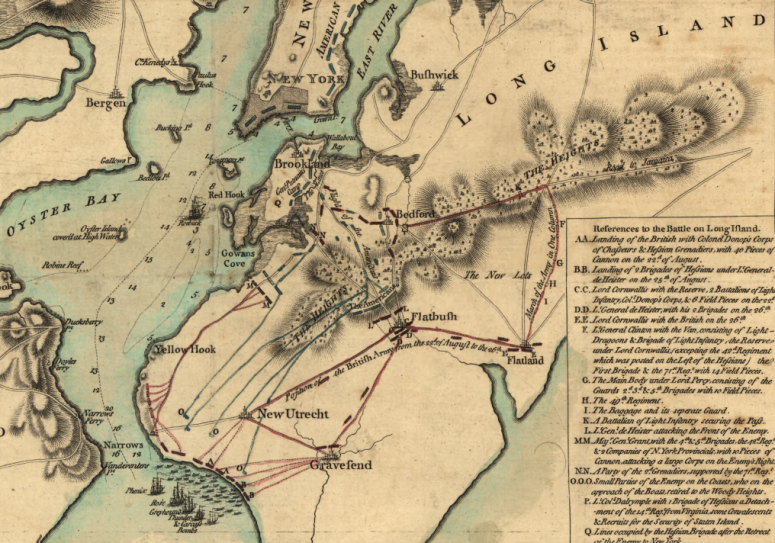
By August 21, the British army made their move and landed on the shore of Gravesend Bay in what is now the southern portion of Brooklyn, NY. Five days later, they launched an attack on the American troops settled in the Heights of Guan, which were a series of hills that extended along a ridge in the western portion of Long Island. The fight would prove to be disastrous for the Americans, who were outflanked and surrounded. With a strength of roughly 10,000 troops, the Americans faced heavy losses, up to twenty percent between captures and casualties. The remaining troops fled to Brooklyn Heights where a fortified American position had been established. Rather than pursue the Americans, British Commander William Howe chose to halt the attack and instead prepare for a siege that would surround the American forces.
With the Continental Army retreating to Brooklyn Heights and the East River to their backs, it appeared as though defeat was imminent. Washington, seeing the upcoming siege as advantageous to the British, called upon more men to cross over from Manhattan to support their position.
On August 28, an area of rain moved into New York and its surrounding countryside. The British had already dug in and prepared for the oncoming siege, during which time Washington had his cannons ready to bombard the enemy. As the rain continued to fall and the prospects of the impending siege appeared more dire, Washington sent a letter to General William Heath who was stationed in the Bronx to send every flat-bottomed boat to Washington's location.
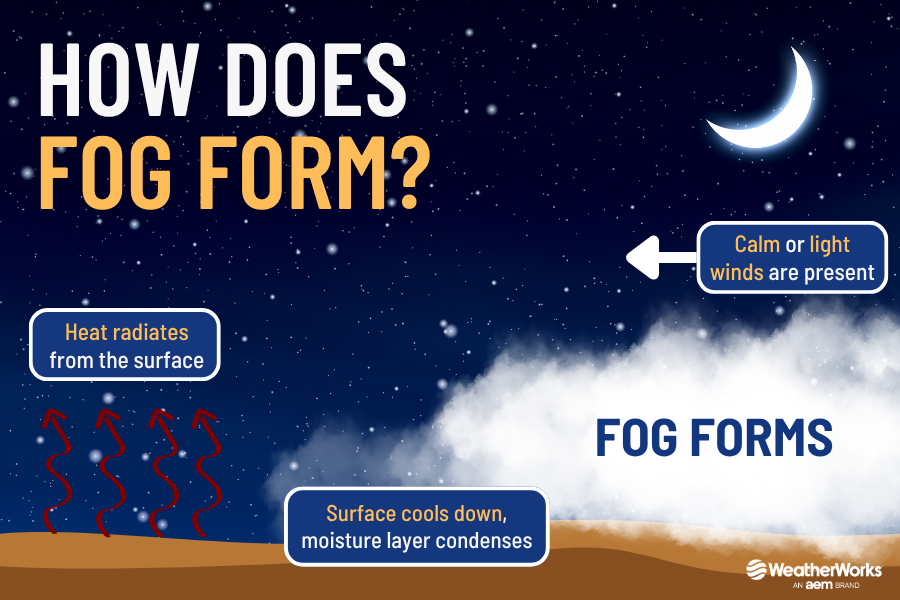
By August 29, Washington and his generals decided that a retreat was necessary, with initial movements starting that evening. Gradually, their units were evacuated across the East River, aided by the cover of nightfall and also a thick fog that had begun to blanket the area after the rain had exited overnight. This is a very common occurance, as clear skies after rainfall, along with calming winds, help to radiate heat away from the surface and saturate the air into that low level cloud we are familar with.
British patrols scouted the area leading up to their planned assault, however, the foggy conditions concealed the American evacuation from Brooklyn Heights. By the time the British noticed there did not appear to be any Americans present and begun scouring the area for any signs of life, Washington, the last man to retreat, embarked with his men on one final boat crossing of the East River.
The fog that developed during the overnight/early morning hours of August 30, 1776 helped shroud the American's evacuation from the British, who were stationed only a few hundred yards away. As such, rather than be defeated (or worse, Washington and his men captured), the American Revolution wore on for another five years before the British surrendered at the Battle of Yorktown in 1781.


