.png)
It was a hot summer evening in Greater New York when storms passed through the area. Temperatures held in the mid-80s as storms arrived in the city. The sun had just set when the first lightning strikes struck a substation, causing two circuit breakers to trip. As events cascaded through the evening, the result was something bizarre for the 9 million people affected: a near citywide blackout.
What resulted from lightning strikes was a 25 hour blackout, one that rivaled the region-wide blackouts that plagued the Northeast twelve years earlier. After all was said and done, over seven were left dead, over 500 injured, and 4,500 arrests made. The infamous 1977 New York City Blackout remains a distinct memory to this day for those who lived through it.
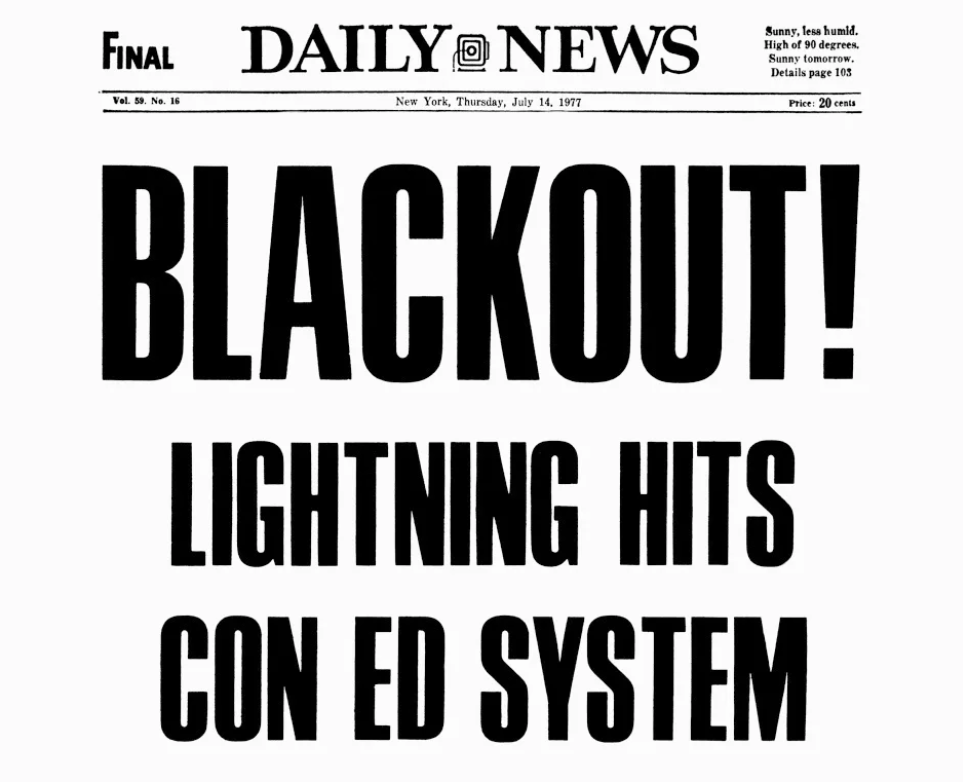
The energy company Consolidated Edison (better known as "ConEd") was the main provider of electricity to New York City and much of the surrounding metropolis. Any disruptions, either natural or artificial in origin, had a high-end risk to impacting millions of customers across the United States' largest city.
The chain of events began during the evening of July 13, 1977 as thunderstorms moved across the region. At around 8:34 p.m., lightning struck electrical infrastructure at the Buchanan South substation along the Hudson River, knocking critical transmission equipment out of service. Additional lightning strikes soon followed after, affecting other major transmission lines and placed increasing strain on the remaining power grid.
As transmission routes were knocked out of service, the demand for electricity was shifted onto the few remaining lines. Operators attempted to stabilize the system and reduce the growing load, but additional equipment failures only worsened the situation. One by one, overloaded transmission lines and generating units were forced offline, shifting even more demand onto the shrinking number of operating connections. The result was a cascading failure, with each new loss making the electrical grid increasingly unstable and difficult to recover. In roughly an hour, what began with a series of lightning strikes north of New York City had developed into a widespread collapse of the city’s electrical system.
ConEd could no longer provide enough power to the city. Even as the provider tried to shed customers' power in order to ease the load on the system, generation equipment was unable to distinguish the electrical effects initiated by operators from a legitimate transient short. As a result, the largest generator in New York City, Ravenswood Generating Unit No. 3, shut down in order to protect itself from failure. Once the Ravenswood station shut off, the city was sent into darkness within just an hour of the initial lightning strike.
All of New York City outside of select neighborhoods in southern Queens and the Pratt Institute campus in Brooklyn were affected by the blackout. Unlike a similar blackout that occurred in 1965, which had impacted the wider state of NY, the blackout of 1977 coincided with several ongoing factors that each may of contributed in one way or another to the lasting impacts of this unprecedented event.
Tensions were high among those living in the city at the time. The infamous 'Son of Sam' serial killer was still on the loose and economic woes from a recent financial crisis had led the city more turbulent than it had been in a generation. Not to mention, there was an ongoing heatwave across the Northeast, which further stoked the proverbial flames and may have contributed to the unrest that sprung up.
31 neighborhoods in New York City experienced vandalism and looting, with Crown Heights having 75 of its stores on a five-block stretch looted and damaged. Fifty new Pontiacs from a car dealership in The Bronx were stolen and thirty-five blocks of Broadway in Brooklyn were destroyed.
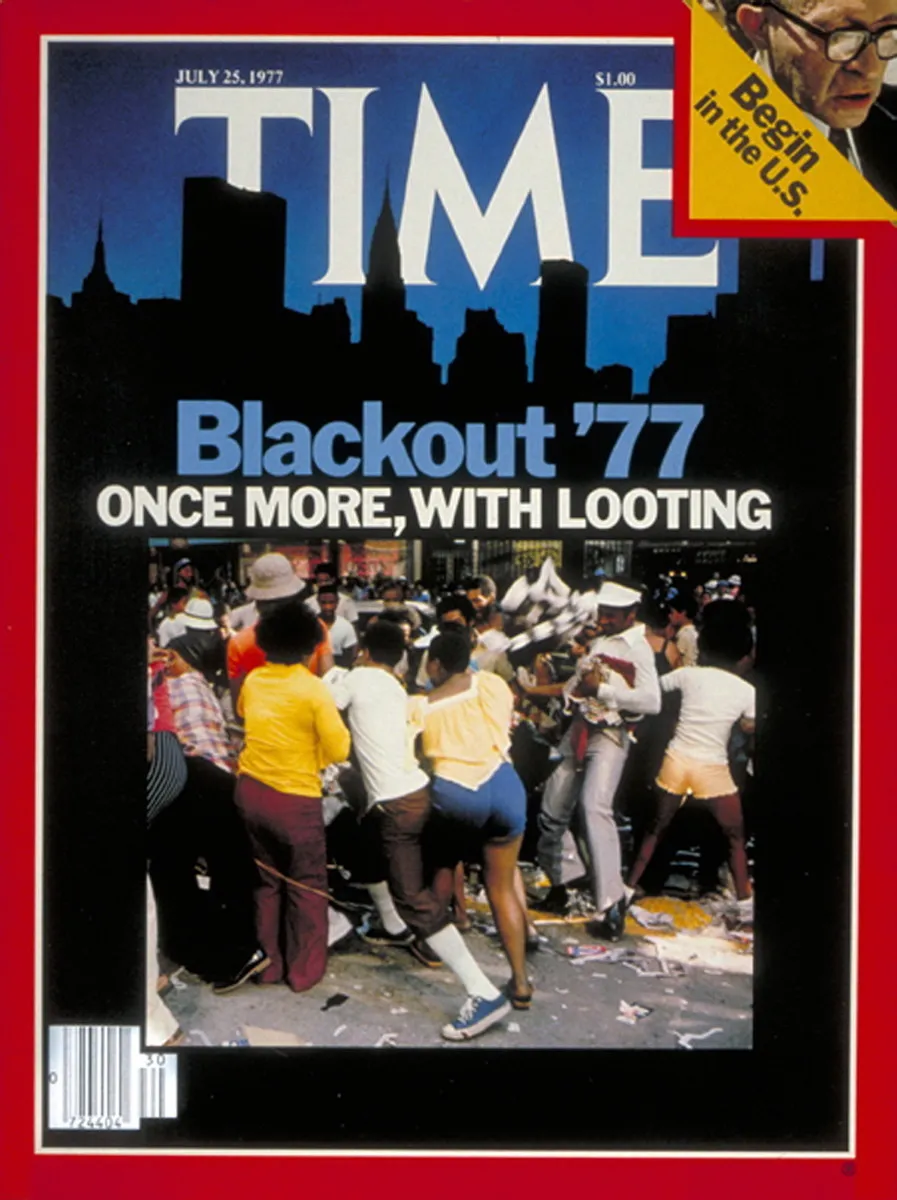
Power was slow to return, gradually coming back throughout the next day. The blackout would not officially end until the evening of July 14, just over twenty-four hours after the initial lightning strike. When the lights returned, over 1,600 stores had been damaged with 1,037 fires responded to. Damages amounted to over $300 million ($1.5 billion today).
The largest mass arrest in New York City history occurred as a result of the blackout as well, with 3,776 people taken into custody, many of whom were placed in overcrowded jail cells and holding pens. Three people died in fires and four homicides took place.
The blackout of 1977 remains one of the most infamous nights in New York City history. While the widespread power failure is often remembered for the chaos that followed, the chain of events began with something far more familiar: a summertime thunderstorm. A series of lightning strikes north of the city exposed vulnerabilities in the electrical grid, setting off a cascade of failures that left millions in the dark. Since then, ConEd implemented comprehensive division plans to restore subsystems in parallel during these kinds of emergencies, to hopefully avoid cascading failures in future strikes.
Nearly five decades later, the blackout continues to serve as a striking reminder of the power of weather. Impacts can extend far beyond heavy rain, damaging winds, or flooding. Sometimes, a single storm or lightning strike can trigger a chain reaction with consequences reaching well beyond the area where the first bolt struck.


