.png)
There have been many instances throughout world history where weather played a pivotal role in the course of events. Whether it's the success of the D-Day invasion during the Second World War or the destruction of the Spanish Armada in the 16th Century, nature has shaped the course of history on numerous occasions.
One of the more prominent examples of weather's role in history came during the War of 1812, an often forgotten war in the early years of the Republic of the United States, which has been called by some as the second War of Independence. The most notable part of the battled occurred during the Burning of Washington from August 24-25, 1814 in which the British army captured and occupied the nation's capital. The occupation was brief, however, as intense storms are thought to have played a role in driving British forces back to their ships. Let's discuss it.
The events leading up to the Burning of Washington, D.C. were years in the making, sparked by tensions over territorial expansion across the North American continent and the impressment of sailors. The United States, still a young nation at the time, eventually declared war on the United Kingdom after increasing pressures on its sovereignty.
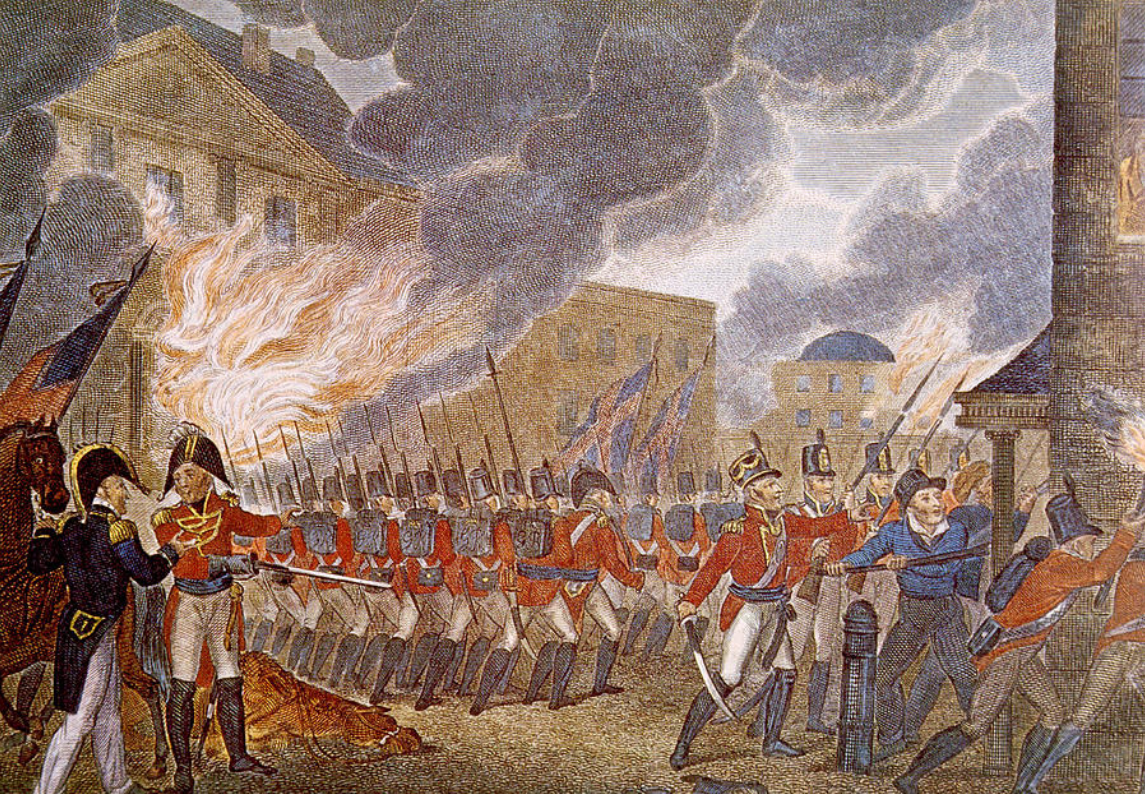
For the first two years of the war, the British Army had not been overly focused on its operations against the Americans. Instead, they had their eyes set on a more formidable foe: Napoleon Bonaparte. Once the French emperor was defeated in April 1814, the British were finally able to use more of their troops and ships for the war against the United States.
Prior to the Chesapeake Campaign (which included the Burning of Washington), the United States had launched an attack against the British Province of Upper Canada in the city of York (modern-day Toronto, Canada). The Americans secured a victory there, burning and looting the city in the process. British public opinion viewed the attack on Washington as retribution for the events in York.
British forces had established a presence near the Chesapeake Bay as early as March 1813 when Rear Admiral George Cockburn led a blockade at the mouth of the Chesapeake Bay near Hampton Roads, Virginia. Throughout the summer of 1814, various campaigns would be made throughout southern Maryland by the British army before ultimately sailing up the Chesapeake toward the District of Columbia by late August.
The attack on the nation's capital began on August 24 and lasted for two days. During this time, British forces used torches and gunpowder paste to set fire to many structures such as the U.S. Capitol, the White House, the U.S. Department of War building, and other public buildings in the town center. Enemy forces searched for the U.S. Treasury Building in hopes of finding currency to plunder, however upon finding it they discovered little more than old records. The weather for the day was fairly hot, even by late-August standards with high temperatures approaching 100°F.

By August 25, the British were wrapping up their operations in Washington, D.C., but trouble would be on their doorsteps. Storms began to develop in the region during the afternoon, with arriving rains helping to douse the ongoing fires scattered throughout the city. What made these the ultimate factor in saving the city was when they rapidly intensified into severe thunderstorms with strong winds and a possible tornado.
According to the National Weather Service, using records from the time, a tornado "struck northwest Washington and downtown", inflicting "major structural damage to the residents of the city". Pushing through the center of the city near Constitution Avenue, the tornado was said to have lifted two cannons and carried them several yards. British and American soldiers alike were hit by the passing tornado, with some contemporary accounts suggesting the British sustained heavier casulties.
British soldier George Robert Gleig wrote in detail about what he witnessed that day in the American capital:
"Roofs of houses were torn off by it, and whirled into the air like sheets of paper; whilst the rain which accompanied it, resembled the rushing of a mighty cataract, rather than the dropping of a shower. The darkness was as great as if the sun had long set, and the last remains of twilight had comes on, occasionally relieved by flashes of vivid lightning streaming through... [which]... produced the most appalling effect I have ever, and probably ever shall, witness."
The true impact the storms had on the plans of the British remain up to historian interpretation, with some arguing that they had no intention of occupying the city and only wanted to destroy government buildings in retaliation. While the severe weather may have hastened the end of the burning of Washington, there is evidence suggesting that the heavy rainfall actually did more damage to the burned-out buildings, cracking the already charred walls of the White House. Additionally, with British intentions set upon only burning government buildings, the damage inflicted by the tornado destroyed additional buildings beyond the scope of the British Army's plans. Regardless, the severe storms were enough to shock the foreign presence with heavier casulaties and a hasty retreat.
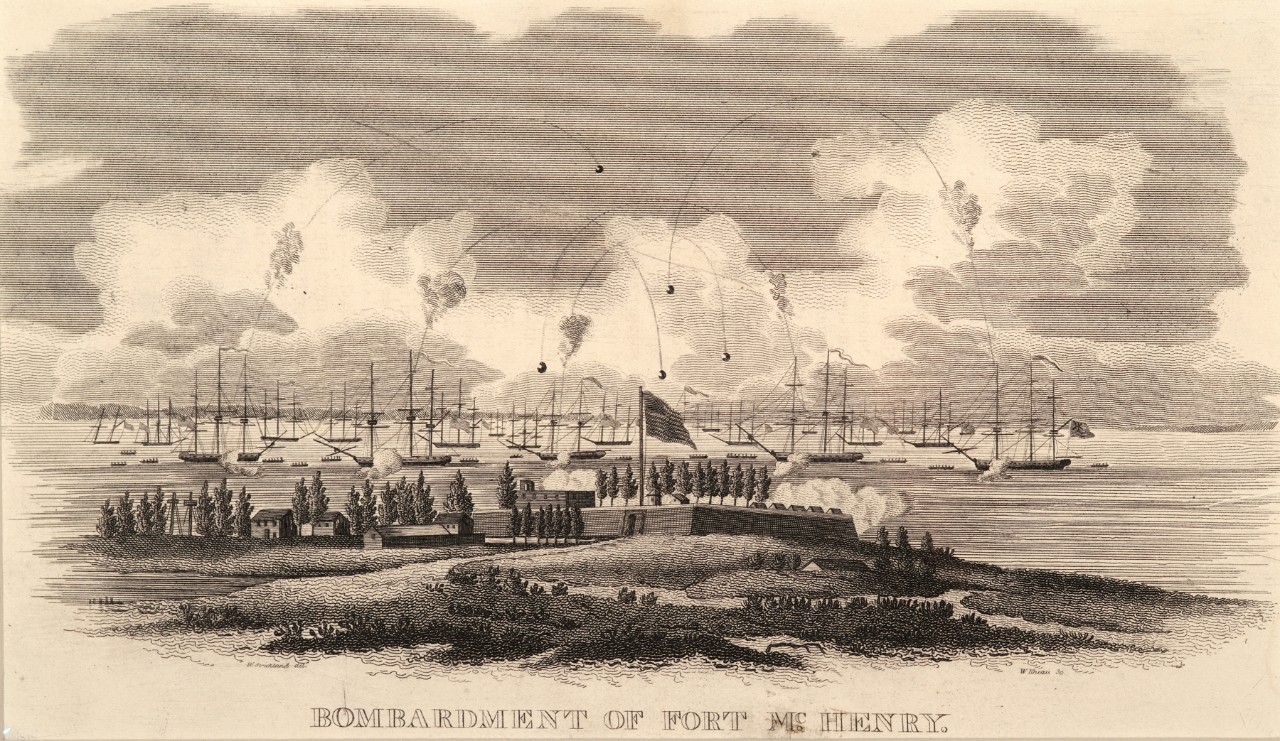
Following the attack on Washington, British forces would eventually move north into Baltimore about two weeks later. During their bombardment of Fort McHenry, a local lawyer turned-poet, Francis Scott Key, was inspired to write the poem "Defense of Fort M'Henry", which would later become the lyrics for "The Star-Spangled Banner".
In the end, the war would prove to have no real winners, with peace ultimately restored to the prewar status quo. Despite all of this, a severe storm one late-summer afternoon marked a defining moment for the young nation's capital.


