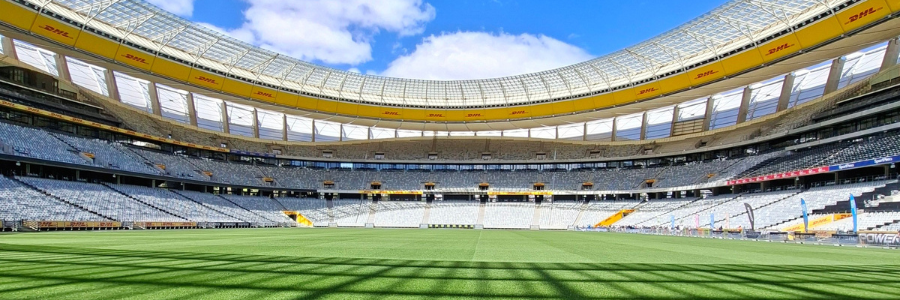
Cue the whistle! The 2026 FIFA World Cup ⚽ kicks off ⚽ in the United States, Canada, and Mexico this week. This will be the largest World Cup ever hosted as well, with 48 countries taking part and matches played across sixteen cities over three North American nations. With the tournament occurring in the middle of summer as well, an important question does arise: what role will weather play this year?
Let’s take a look at past World Cups have dealt with weather issues, especially the 1994 World Cup in the United State, and what that might indicate for the upcoming tournament.

With any outdoor sporting event, there are many weather hazards that can impact the play of the game. From heat and rain to lightning and damaging winds, it impacts the players and especially the spectators. Let's look at how weather has impacted the past few games:
The most impactful weather-related adjustment came during the 2022 World Cup in Qatar. Located along the Persian Gulf in the Middle East, Qatar experiences extreme summer heat. Due to dangerously high temperatures—average highs of 105–110°F, FIFA moved the event to November and December, when average highs are more manageable, typically in the 70s and 80s.
Another year that had some weather related issues came during the 2014 World Cup, which had several cities across the country host the games. While not to the extreme heat seen during the Summer months in Qatar, Brazil too had to deal with heat, humidity, and tropical rain storms. High temperatures were generally in the 80s, but combined with oppressive humidity levels, it led to FIFA implementing several cooling breaks during matches.
The 2018 World Cup in Russia featured a wide range of weather conditions, though nothing was particularly extreme. Northern host cities were much cooler than average for June and July, with occasional rain and thunderstorms, while southern cities experienced warmer conditions during matches.
The 2010 World Cup in South Africa saw very minimal impacts, as it took place during the Southern Hemisphere's winter season. Conditions during the matches were much cooler than usual in some areas, but overall the weather pattern in place did not lead to any major disruptions to the games. Other World Cups from the 1990s and early 2000s largely avoided major weather disruptions as well, with just typical summertime concerns. There was one notable exception: the 1994 World Cup in the United States.
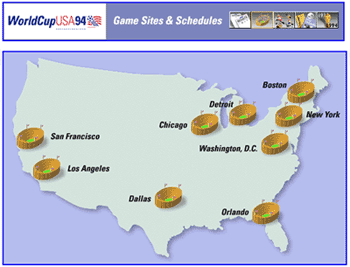
Weather impacts during the 1994 World Cup were primarily driven by heat and humidity. That tournament featured 24 nations competing across nine venues: San Francisco, Los Angeles, Dallas, Chicago, Detroit, Orlando, Washington D.C., New York/New Jersey (East Rutherford, NJ), and Boston (Foxboro, MA). Eight of the nine stadiums were open-air, with Detroit being the only indoor venue.
Many matches were defined by heat fatigue, with game-time temperatures often reaching well into the 90s alongside high humidity. This was especially problematic in cities like Dallas and Orlando. In Dallas, scorching temperatures and high dew points created extremely uncomfortable conditions, worsened by matches being played in the afternoon to accommodate European audiences. Players could even feel the intense heat radiating from the Cotton Bowl turf through their cleats.
Orlando’s Citrus Bowl hosted some of the most infamous matches during the World Cup, with temperatures officially recorded in the 90s. There have been reports, however, that suggested the thermometer on the field approached 100°F. Combined with central Florida’s notorious high humidity, conditions were sweltering. During one match, as many as 160 fans were treated for heal-related illnesses and 12 were hospitalized.
Elsewhere, heat waves across the central United States and west coast contributed to difficult playing conditions, like in Chicago and at the Rose Bowl in Pasadena, California. At the time, hydration protocols and cooling breaks from FIFA were less structured and as frequent as they are today, leaving players more vulnerable to heat-related illnesses
Thunderstorms are a common sight in the United States during the summer time, though fortunately most storm activity during the games avoided the venues themselves. While storms were nearby during some match times, none caused cancellations or major stoppage time. Ultimately, heat, not storms, was the dominant weather challenge during this tournament.
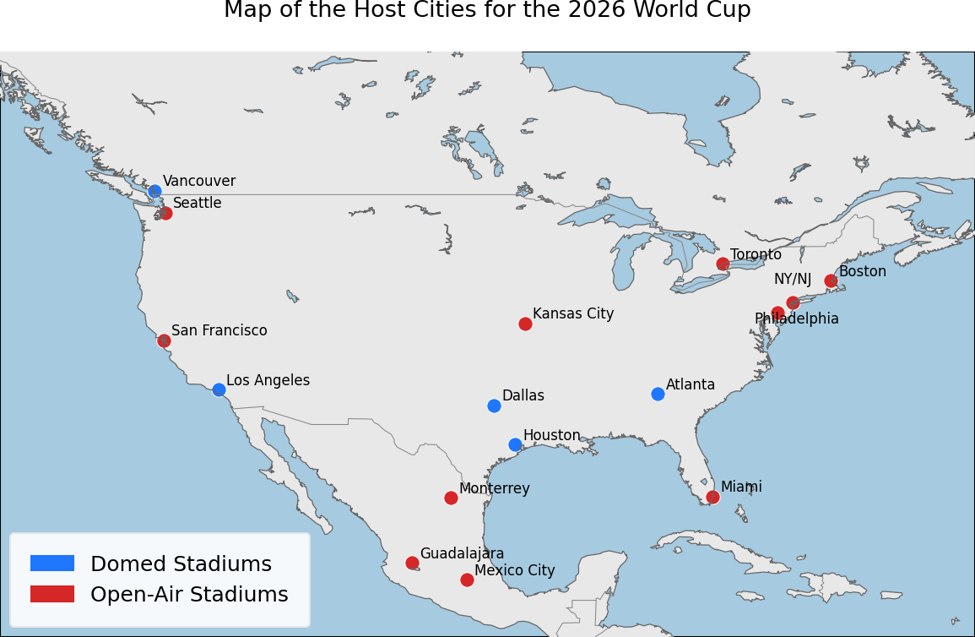
Since this year’s World Cup is taking place in the United States again, along with Canada and Mexico, similar issues to the 1994 tournament could arise, particularly with heat and humidity. However, one major difference is the presence of more modern stadiums, many of which are now domed or have retractable roofs, especially in the southern United States. Because of this, cities such as Los Angeles, Dallas, Houston, and Atlanta are largely protected from adverse weather conditions and can be considered low risk in terms of direct weather impacts during matches.
For the open-air stadiums in the U.S., climatology gives us a good idea of what conditions players and fans can expect during June and July. Miami is likely to experience the most oppressive conditions with high temperatures near 90°F and very high dew points in the mid-to-upper 70s. This kind of heat and humidity combination can create dangerous playing conditions. Kansas City will also face significant heat and humidity, though slightly less intense. Fortunately, most matches in these locations are scheduled in the evening, which should help reduce the worst impacts of daytime heating.
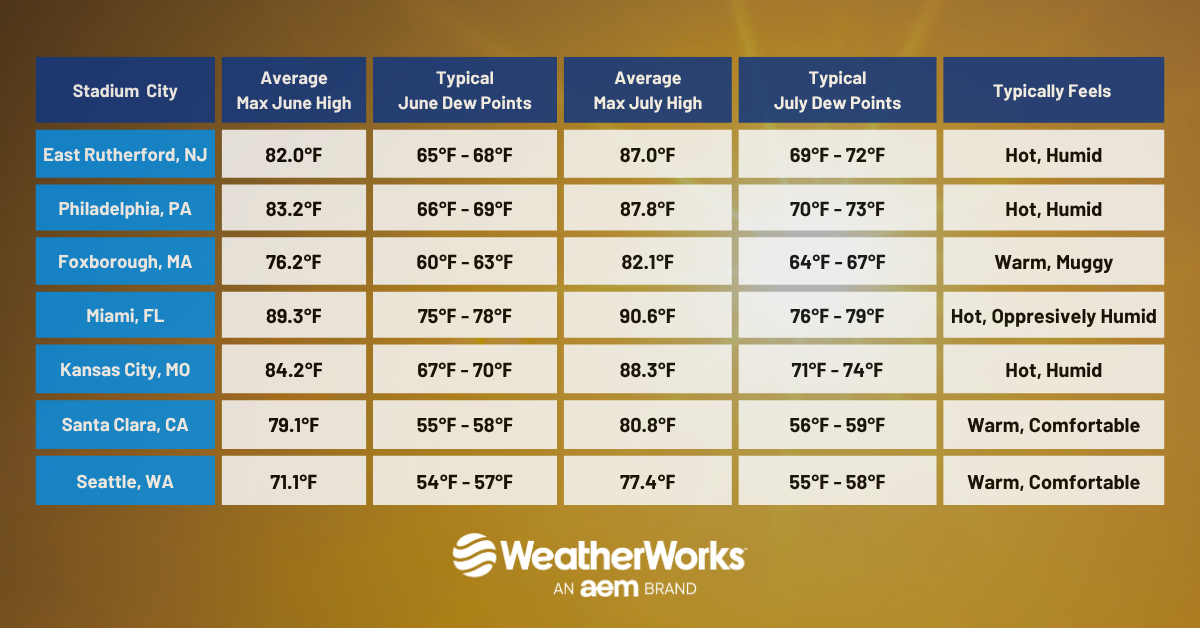
For the Northeast, cities such as East Rutherford, New Jersey (New Jersey New York Stadium), and Philadelphia, Pennsylvania, will also see hot and humid conditions, which is typical of early to mid-summer. Average max high temperatures can range from the low 80s in June to the upper 80s and around 90 in July, with dew points frequently reaching well into the upper 60s and low 70s. These conditions can become even more extreme if a heat wave develops, where you have frequent days into the 90s, even near 100. This is particularly important because several matches, including the final on July 19, are scheduled for the afternoon, when temperatures are typically at their highest during the daytime.
.png)
Further north, Foxborough, Massachusetts (Boston Stadium) will generally be more moderate with slightly cooler temperatures and lower humidity compared to the Mid-Atlantic region, though still warm enough to pose some level of heat stress on players. On the west coast, Seattle and San Francisco (Santa Clara, CA) are expected to have the most favorable conditions of all US cities. These cities typically experience mild temperatures and much lower humidity during the summer, making them the most comfortable environments for both players and spectators.
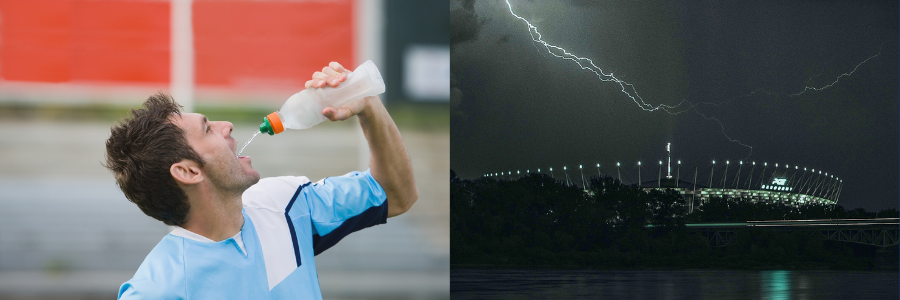
Based on lessons learned from the 1994 World Cup, FIFA has implemented several new measures to reduce heat-related risks. There will be mandatory hydration breaks approximately 22 minutes into each half, lasting roughly three minutes from whistle to whistle. These breaks will occur in every match regardless of location, temperature, or whether the stadium is covered. In addition, the tournament schedule has been designed with a wide range of start times, allowing many games in hotter locations to take place during the evening in order to limit their heat exposure.
Thunderstorms and lightning are another concern. Regulations requires matches to be suspended if lightning is detected within 10 miles of a stadium, and play cannot resume until 30 minutes after the last strike has passed within that radius. As a result, games could be delayed for extended periods with repeated storms. This is not just a theoretical concern. The 2025 FIFA Club World Cup, which was also held in the United States had four matches suspended due to lightning. One match experienced a delay of nearly two hours after being stopped at halftime!
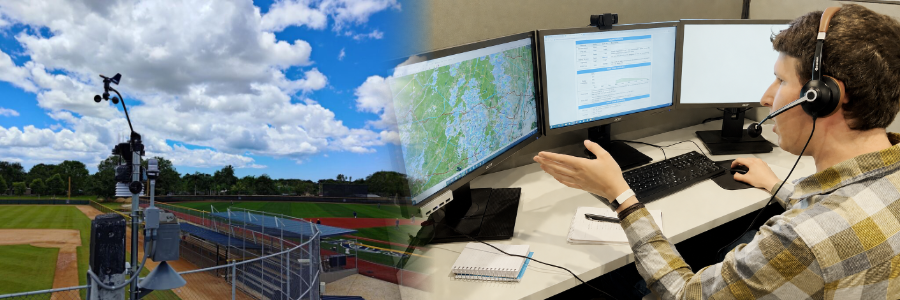
From extreme heat and lightning to damaging winds wind gusts and torrential rainfall, these weather hazards can create significant challenges for venues and event operators. Having the right technology at your disposable is important, but so is having the right team of experts who can help you anticipate impacts, coordinate responses, and make informed decisions when conditions change.
The safety and well-being of your fans, players, and staff always comes first. That's why AEM is helping to lead to he way with a powerful combination of advanced weather inlelligence systems, decision support tools, and expert meteorological guidance. We're proud to be supporting a few venues in select host cities this year for 2026 FIFA World cup, providing timely weather information and on-site expertise.
Visit AEM.eco to learn more about our suite of weather poroducts and hardware capabilties for your organization, or you can explore some of the artlces below for additional insights into weather hazards and the solutions you may need.


